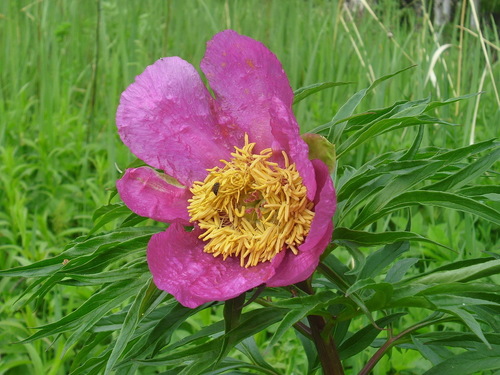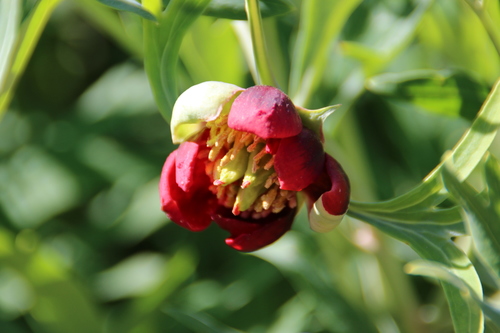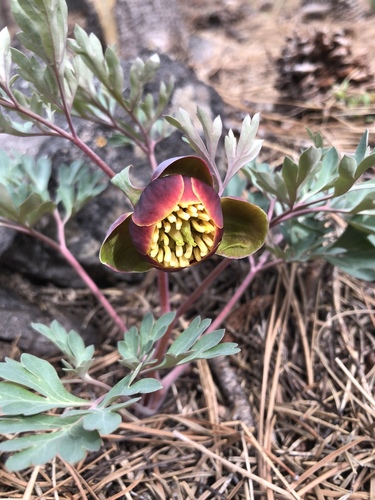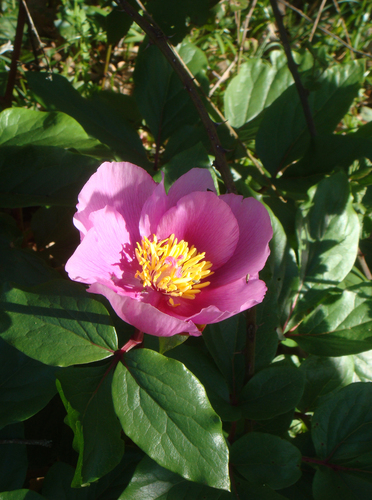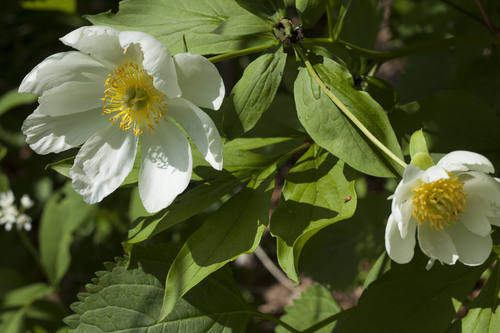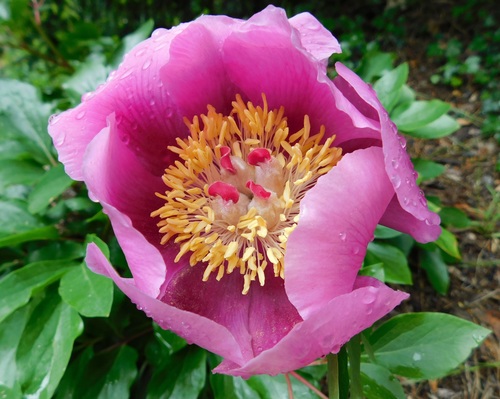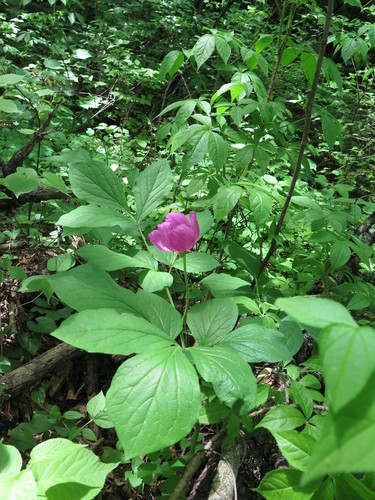
About Paeonia obovata Maxim.
Paeonia obovata Maxim. is a polyploid complex that displays significant morphological variability. It is a perennial herbaceous plant that grows 30 to 70 cm tall. It dies back to the ground each autumn, and overwinters with buds located just below the soil surface. The typical subspecies of P. obovata grows in forests, including deciduous broad-leaved forests and coniferous forests, and can be found at altitudes between 200 and 2800 meters. In China, this subspecies occurs naturally in Anhui, southeastern Gansu, northern Guizhou, Hebei, Heilongjiang, southeastern and western Henan, western Hubei, northwestern Hunan, northern Jiangxi, eastern Jilin, Liaoning, southeastern Inner Mongolia, southern Ningxia, eastern Qinghai, southern Shaanxi, Shanxi, Sichuan, and northwestern Zhejiang. It also grows in Korea, the Russian Far East (Amur Oblast, Primorsky Krai, Sakhalin, Shikotan), and Japan (Hokkaido, Honshu, Shikoku, Kyushu). The subspecies P. obovata ssp. willmottiae is restricted to deciduous forests between 800 and 2800 meters in altitude, in the area surrounding the Qinling Range in China. The roots of P. obovata, alongside those of P. lactiflora, are used in traditional Chinese medicine as a painkiller, tranquillizer, and anti-inflammatory drug, as well as a treatment for cardiovascular disease and bleeding. P. obovata contains specific monoterpene glucosides. The indigenous Ainu people of Hokkaido used this plant, which they call horap or orap, as a painkiller. Plant hunter Ernest Henry Wilson introduced Paeonia obovata to Europe in 1900. It has been cultivated in Europe since that time, first grown mainly in botanical gardens, and has recently become available to home gardeners.