About Paeonia broteroi Boiss. & Reut.
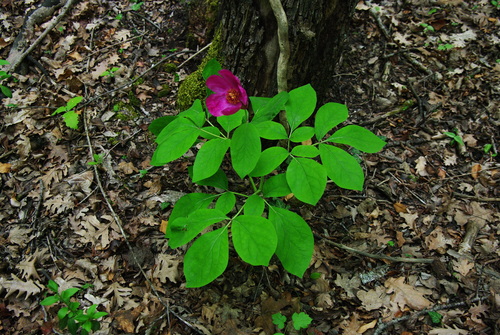
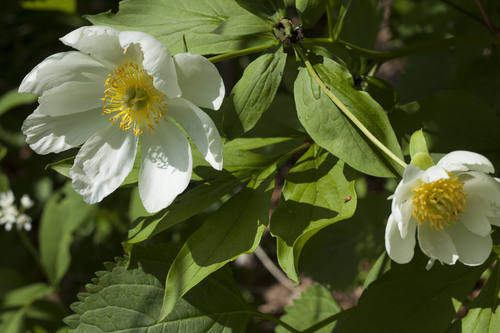
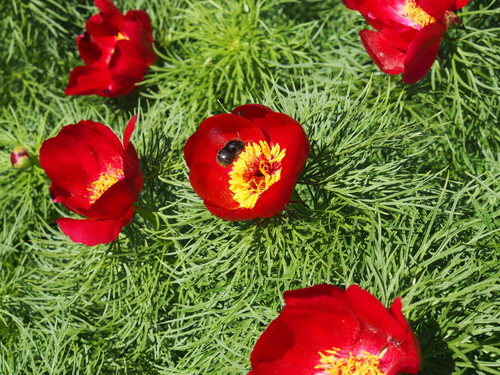
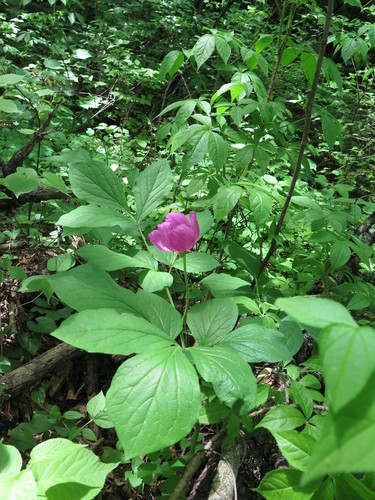
Paeonia broteroi, also referenced as Paeonia broteri in this text, is a perennial herbaceous species that reaches 30–80 cm in height. It is a diploid species with 10 chromosomes (2n=10). It occurs naturally mostly in the western Iberian Peninsula, covering most of Portugal and western Spain, but is absent from the humid Northwest including north-western Portugal and Green Spain. Two recorded specimens claimed to originate from northern Morocco are most likely actually from Spain. Despite having a broad range, the species occurs very sparsely. It grows among shrubs, oak forests, or pine forests in limestone soils at altitudes between 300 and 1,830 m (980 to 6,000 ft). In the wild, P. broteri flowers between April and early June, with seeds ripening in August or September. It can also grow in meadows, pastures, the undergrowth of shrubs, pine, and oak forests, rocky places, and screes, favoring humid spots, always on well-matured limestone soils at altitudes between 300 and 1800 m. It is commonly found growing alongside Adonis vernalis, Cytisus reverchonii, Quercus rotundifolia, Pinus nigra, Pinus pinaster, and Polygonatum odoratum. Populations from different regions vary in number of flowers per plant, petal size, number of stamens per flower, and number of ovules per carpel. These variations are linked to the region's dominant pollinators: for example, honey bees and bumble bees (Bombus terrestris) are the main pollinators in Sierra de Cazorla, while smaller halictid bees are dominant in Sierra de Jaén.