About Packera pseudaurea (Rydb.) W.A.Weber & Á.Löve
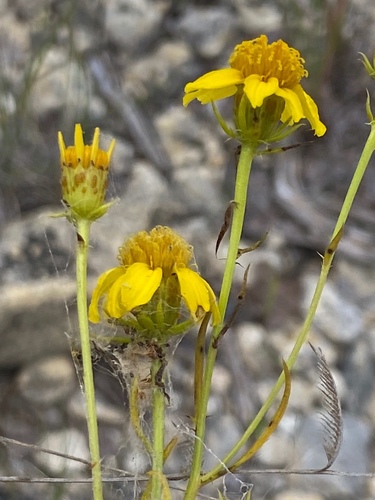
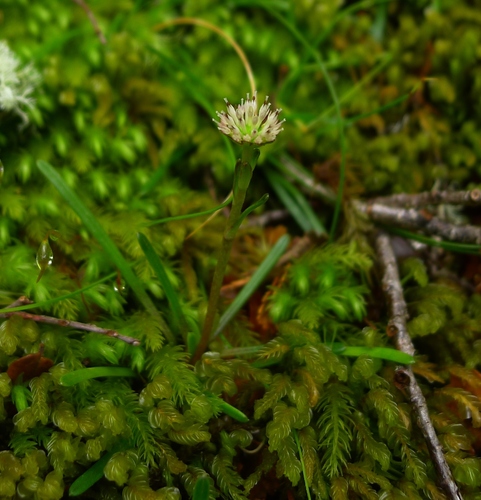
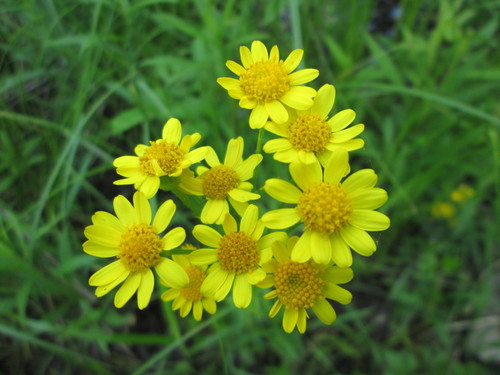
Packera pseudaurea, whose scientific name is (Rydb.) W.A.Weber & Á.Löve, is a species of flowering plant in the aster family. It has the common name falsegold groundsel. This plant is native to North America, where it occurs in the western and central regions of Canada and the United States. It grows in mountain habitats including meadows, streambanks, and woodlands. It is a perennial herb. It typically grows one erect stem, and sometimes produces a small cluster of a few stems, reaching a maximum height of around 70 centimeters. Its basal leaves have blades that are rounded, oval, or widely lance-shaped, growing up to 10 centimeters long, and these blades are carried on very long petioles. Leaves positioned higher on the stem have no petioles, and their bases clasp the stem. These upper leaves are narrow, pointed, and have serrated edges. The plant's inflorescence holds several flower heads arranged in a flat-topped cluster that may be loose or dense. Each flower head contains many yellow disc florets. Most heads also have several yellow ray florets, though some heads do not have ray florets. There are three recognized varieties of this species. Variety flavula grows along a long strip of mountains stretching from Idaho to New Mexico. Variety semicordata is found mainly only in the upper Midwest region. Variety pseudaurea is distributed across the entire western portion of the full range of the species.