About Pachysandra terminalis Siebold & Zucc.
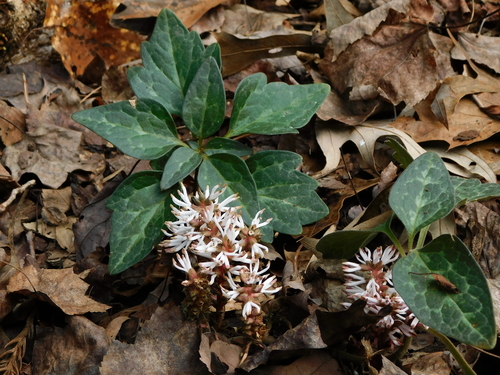
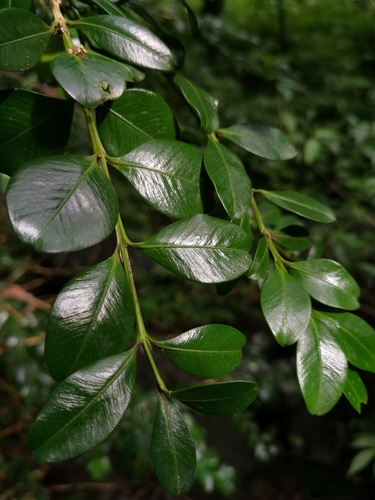
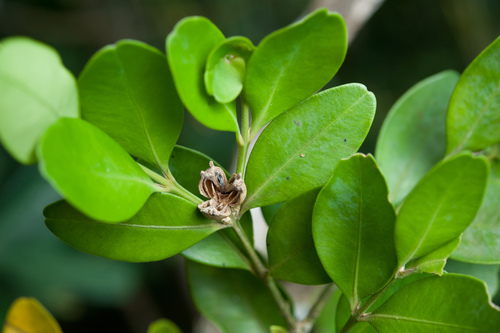
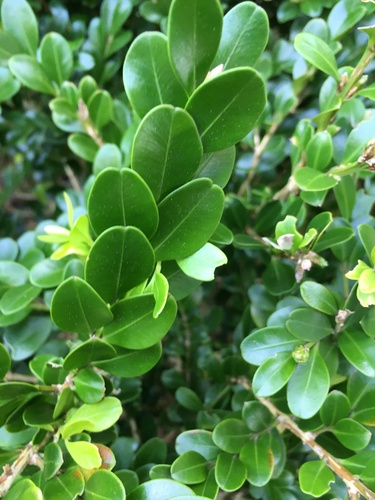
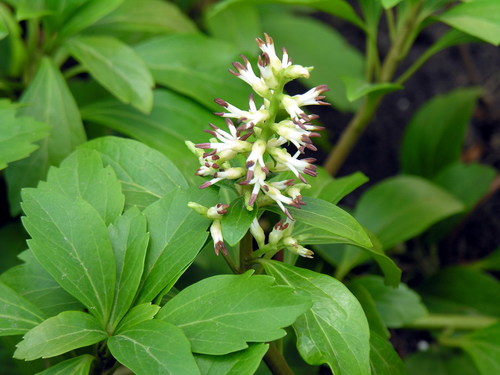
Pachysandra terminalis, commonly known as Japanese pachysandra, carpet box, or Japanese spurge, is a species of flowering plant in the boxwood family Buxaceae. It is native to Japan, Korea, and China, and has been introduced to eastern North America. This is a slow-growing, spreading evergreen perennial that reaches 10 cm (4 in) in height and 60 cm (24 in) in width. It has alternate, simple, glossy leaves and creeping stems; its leaves may turn yellow when exposed to direct sunlight or during winter. When many plants grow together in a spreading patch, they form a dense ground cover. The flowers of this plant are white and grow above the foliage. In temperate locations in the Northern Hemisphere, flowers bloom from late March through all of April. This species is very cold hardy. Its specific epithet terminalis, meaning "ending", refers to the clusters of leaves that grow at the ends of its short stems. Pachysandra terminalis is cultivated as an ornamental plant. It is used as a massed groundcover, a low grouped planting, or an accent ground plant. It also works well as a lower plant in container gardening, and for shaded or "northside" window boxes. When new plantings are spaced 15–30 cm (6–12 in) apart, it takes about three years to form a solid groundcover in suitable climates. It spreads via new stems that sprout from its spreading root system. This plant prefers moist, well-drained, acidic, and rich soil. Humus-amended loam soil with acidic pH, regular applications of organic fertilizer, and consistent water from rainfall or irrigation is optimal growing conditions. However, it can tolerate neutral to slightly alkaline pH soils and periodic dryness, especially in humid, non-arid climates.