About Pachyramphus aglaiae (Lafresnaye, 1839)
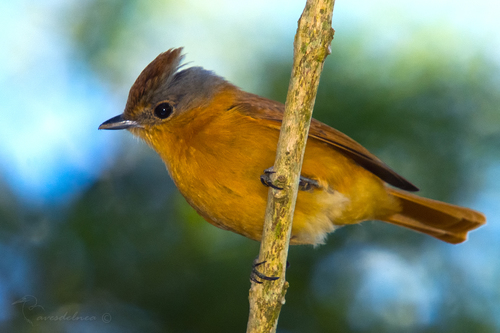
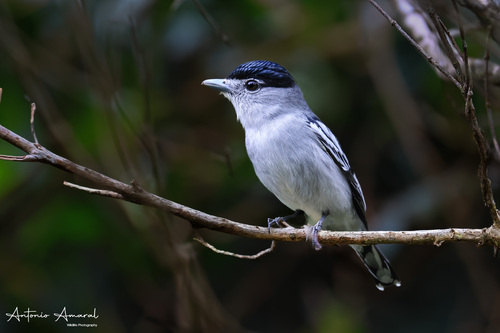
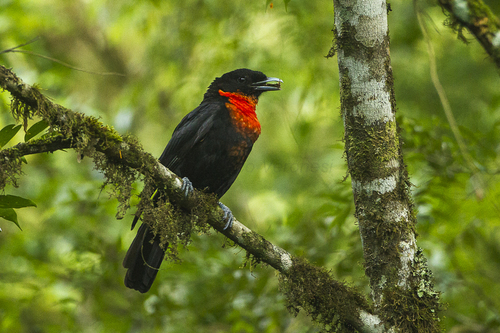
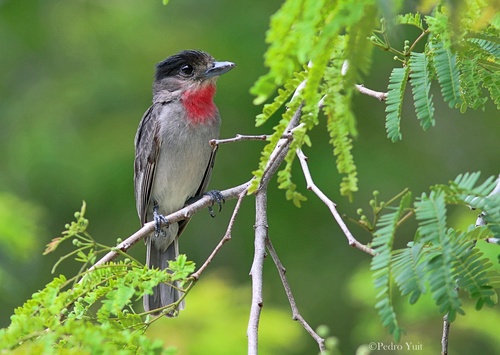
Rose-throated becards (Pachyramphus aglaiae) have a large-headed appearance, with a dark gray to black crown or crest. Male plumage varies by habitat: males are pale gray in drier regions and noticeably darker in rainforests, but all males maintain countershaded gray coloration. The species' signature rose-colored throat patch is variable and not present in all populations; the darkest rainforest-dwelling males have no throat patch at all. Males also have a hidden white shoulder patch used during courtship, and a truncated ninth primary feather, whose function remains unknown. Females are mostly brown, with rusty brown upperparts and pale buffy underparts. Young males resemble females, but have a variable pink throat patch that differs between subspecies. The rose-throated becard's song is short, sliding, and consists of two notes, and it produces one distinct call that is a unique piercing cry. The rose-throated becard is a widespread year-round resident in tropical and subtropical regions of Central America, ranging from Mexico to western Panama. It is the only member of its family that occurs regularly in the United States. Its breeding range extends into the extreme southeastern part of Arizona and extreme southern Texas, but the species generally abandons these northern breeding areas for the winter. Rose-throated becards were first recorded nesting in Arizona along the Santa Cruz River in the late 1940s, and have become established in the state since that time. After a period of sporadic breeding at sites including Arivaca Creek and areas near Sonoita Creek, the species now breeds successfully again along the Santa Cruz River. Breeding in southern Texas has been particularly inconsistent: small numbers of nests have been recorded in the Lower Rio Grande Valley from the 1940s through the 1990s. Breeding in southern Texas may become more regular in the future, as the 2020s have seen a recent increase in observations of the species in this region. Four active rose-throated becard nests were found in Starr County, Texas, in March 2024, all located in riparian forest. Rose-throated becards inhabit riparian woodland, forest edges, and most habitats that contain scattered large trees. The northernmost populations prefer riparian woodlands dominated by cottonwoods. Across the rest of their range, the birds occupy a wider variety of forest habitats as well as scrubland in both wet and semi-arid climates, and forage in open or semi-open areas. Fruit-bearing trees typically attract rose-throated becards. Additional habitat types used by the species include hedgerows, moist subtropical forests, and wetlands.