About Pachypleurum mutellinoides (Crantz) Holub
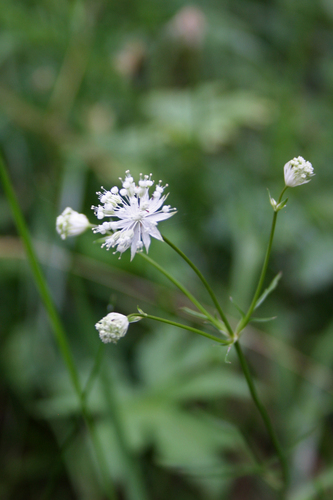
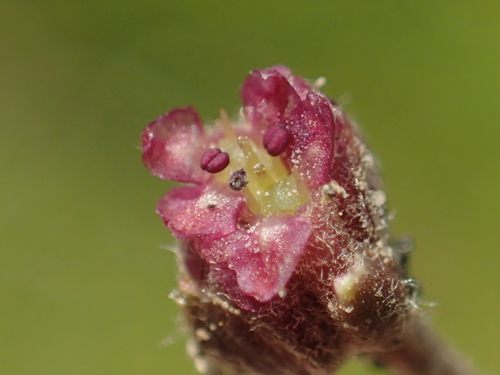
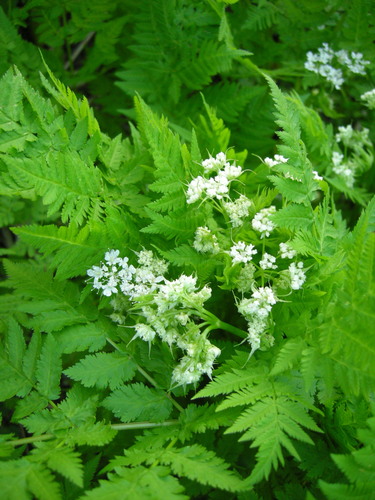
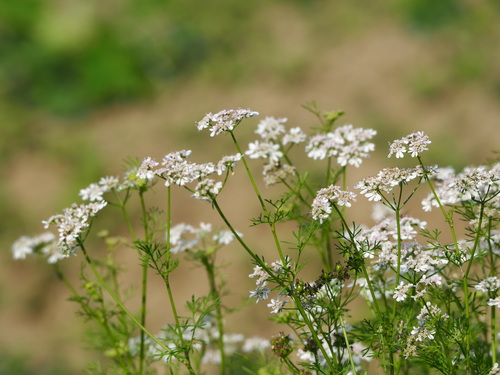
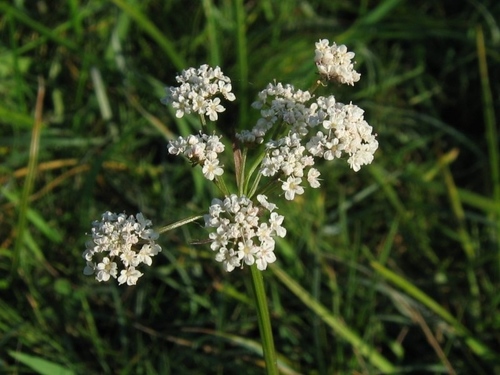
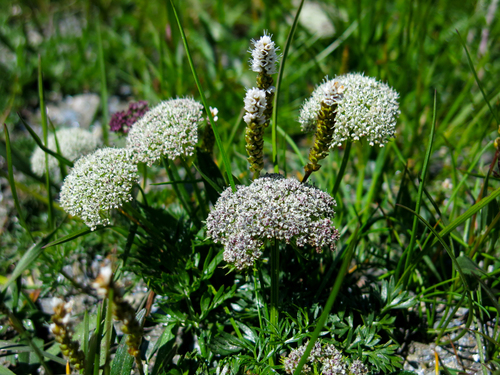
Pachypleurum mutellinoides (Crantz) Holub is a perennial plant that grows to between 5 and 30 cm (2 to 12 inches) tall. It has glabrous (smooth), straight, erect, grooved or ribbed stems. Its basal leaves have long petioles (leaf stalks), and are linear-lanceolate or ovate in shape. The leaves are dark green with a purplish margin, and measure 3–6 cm long and 2–5 cm wide. In Europe, this species blooms from June to August. Its flowers are white or pinkish, arranged in compound umbels that are 2–5 cm (1–2 in) in diameter, with 8 to 20 clusters of 3-lobed petals. After flowering, it produces a fruit (seed capsule). Like other members of the Apiaceae family, this fruit is a polachenarium: a dry schizocarpic fruit made of individual monocarps that separate from a longitudinal central axis (called the columella or carpophore), and they often remain attached to the axis when mature. The fruit is 3–5 mm long and 3.2–3.6 mm wide, with dark brownish lilac stripes. It is broadly ellipsoidal or elongated ellipsoid, with a convex dorsal side marked by five winged ridges. This species is native to Europe, where it occurs in Austria, Czechoslovakia, France, Germany, Italy, Romania, Poland, Switzerland and Yugoslavia, including the Alps, Carpathians, and Balkan mountains. It is also found in Russia, in Altai Krai, Siberia (Irkutsk Oblast, Krasnoyarsk Krai, Yakutskiya, Buryatia, Chita Oblast) and the Far Eastern Federal District (Khabarovsk Krai, Kamchatka Krai, Magadan Oblast). In Asia, it grows in Kazakhstan, Mongolia, Uzbekistan, and Xinjiang, China. Its habitat includes subalpine and alpine regions, where it grows in alpine meadows, rocky or stony areas, stony meadows, grassy areas, overgrown rocks, and rubble or screes.