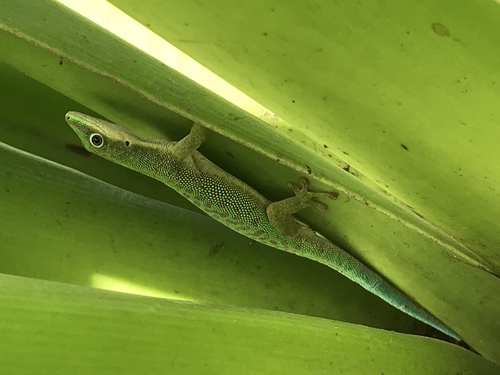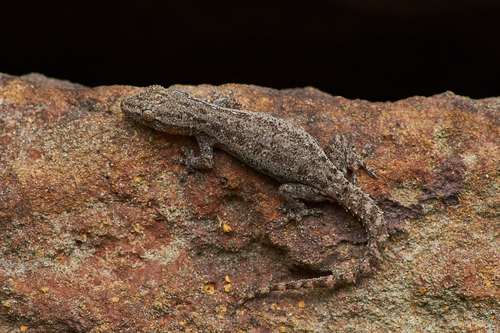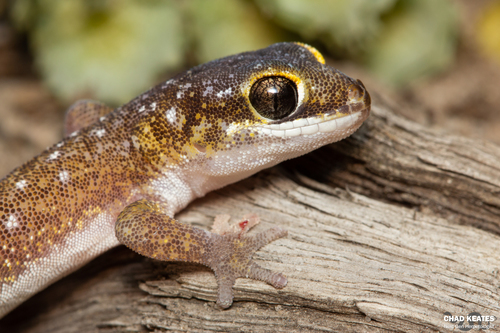
About Pachydactylus austeni Hewitt, 1923
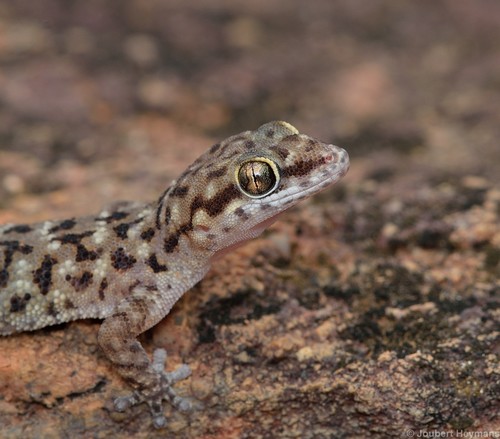
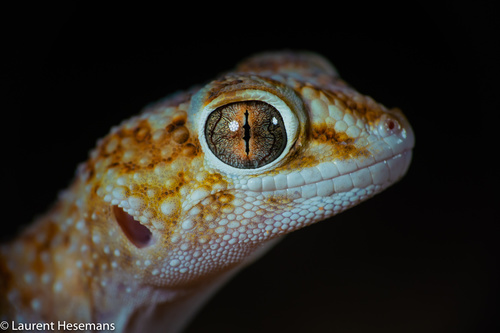
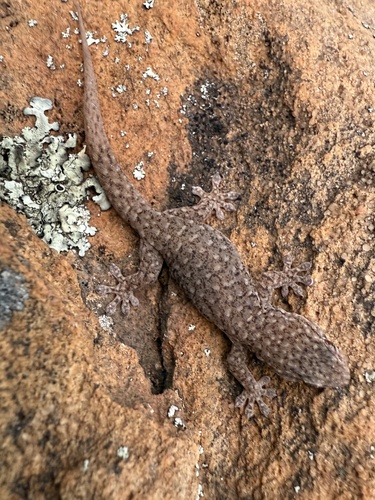
Pachydactylus austeni, formally described by Hewitt in 1923, has a smooth, colourful body, large eyes, and distinctly noticeable yellow or white eyelids. Its natural habitat consists of coastal dunes and alluvial sands, found at elevations up to 600 m (2,000 ft). This species digs and lives in a small burrow within the sand. It leaves its burrow at night to forage for small insects among dune vegetation. Pachydactylus austeni reproduces via oviparity.