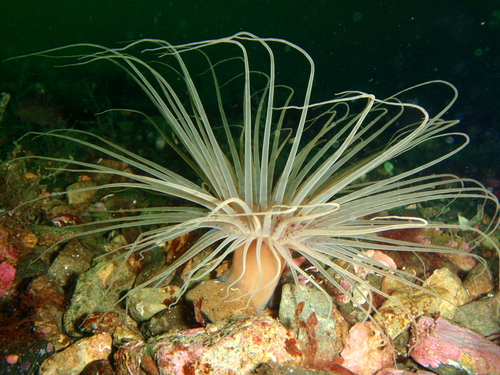
About Pachycerianthus fimbriatus McMurrich, 1910
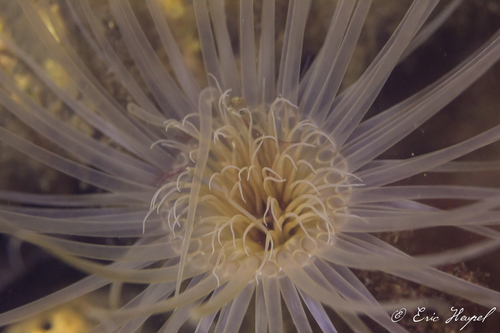
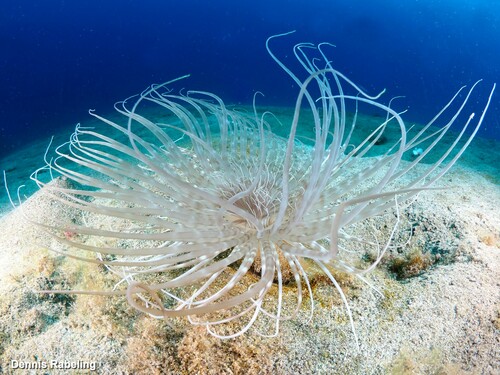
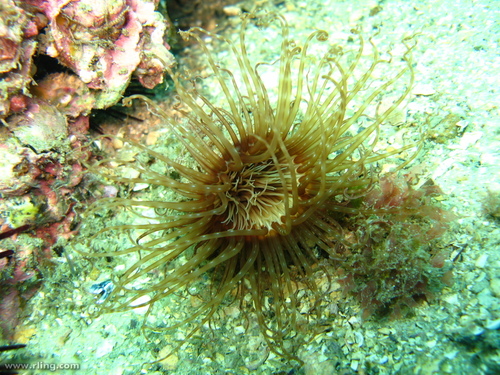
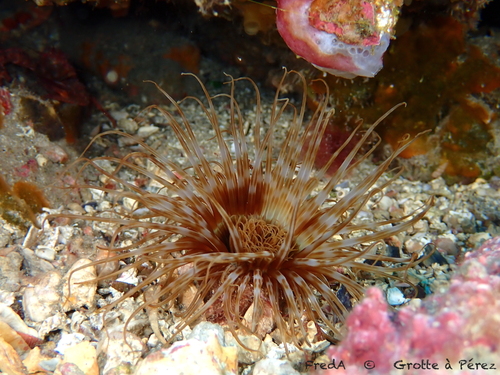
Pachycerianthus fimbriatus McMurrich, 1910 is a species of cerianthid anemone. It burrows into substrate and lives inside a semi-rigid tube constructed from felted nematocysts. Individuals of this anemone often display a bright orange to red coloration. Like most anemones, this tube-dwelling anemone has stinging cells called nematocytes along its tentacles, but these cells are not toxic to humans. Members of the group Ceriantharia have two whorls of tentacles: one whorl surrounds the mouth, called the labial tentacles, and a second whorl sits at the edge of the oral disc, called the marginal tentacles. This species was first scientifically described from Indonesia. It is currently considered to be the same species as Pachycerianthus plicatus, which was originally described from the Pacific Ocean coast of North America.