About Oxytropis campestris (L.) DC.
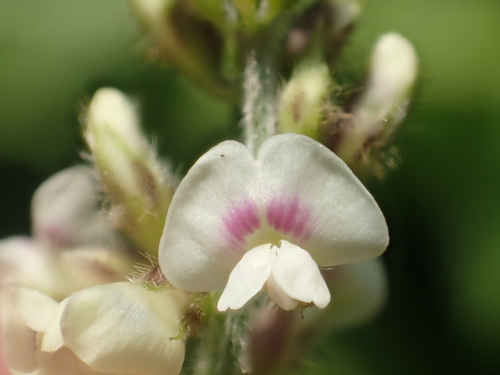
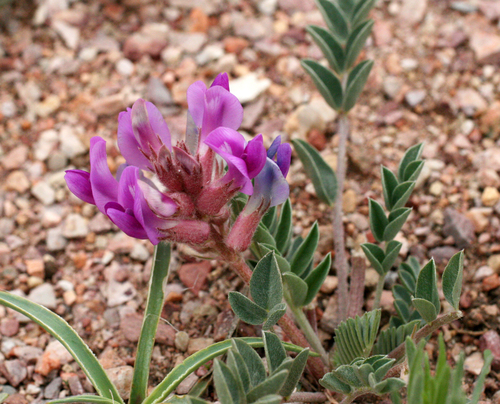
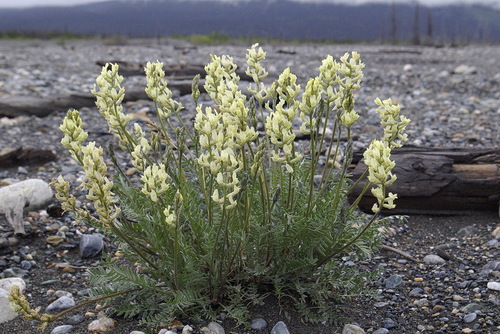
Oxytropis campestris (L.) DC. is a perennial acaulescent forb with a taproot, that reaches 20 to 50 cm in height. Its leaves grow alternately in a pinnate fashion, and are usually 8 to 40 cm long. The leaves are dimorphic: primary leaves have short ovate leaflets, while secondary leaves have 11 to 33 leaflets. These secondary leaflets measure 1 to 2.5 cm long. Oxytropis campestris blooms from May to July. Its flowers are arranged in capitate or oblong racemes that are 4 to 15 cm in length. 8 to 32 flowers rise from a scape. Individual flowers form a five-lobed calyx tube. Flower color ranges from cream to yellowish, but may sometimes be pink, blue, or purple. Flowers usually have black hairs. The keel petals are pointed, and often have purple blotches. After blooming, the plant produces fruit that matures from July to September. The fruits are oblong-ovate legumes, 1.5 to 2 cm in length. They are mostly sessile and dehiscent from the tip. The fruit is membranous and contains many seeds. Oxytropis campestris is poisonous, and may cause loco disease in livestock. This toxicity gives the plant its common name of field locoweed, along with other related variations. Despite its toxicity, mountain goats eat it freely.