About Oxysarcodexia varia (Walker, 1836)
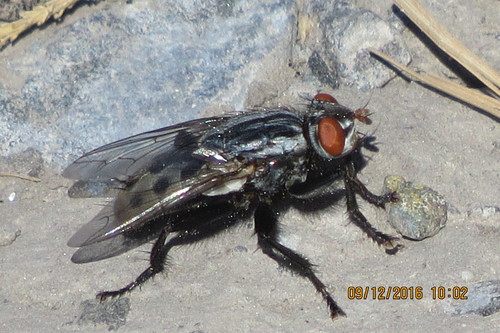
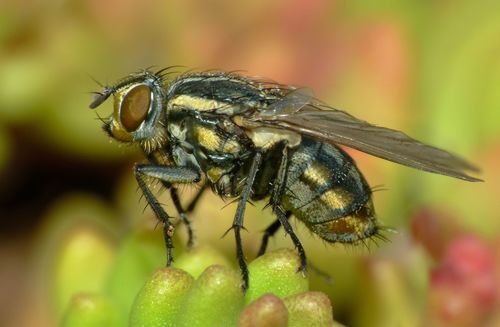
Oxysarcodexia varia, commonly called the striped dung fly, has a thorax marked with continuous black and yellow stripes running from head to abdomen. Its legs are covered in bristles, giving them an almost fluffy appearance. This species strongly resembles the European flesh fly and shares many similar traits with it. The striped dung fly is thought to have originated in South America, and is currently found across Oceania. Confirmed locations include Argentina, Brazil, Chile, Uruguay, Fiji, French Polynesia, Norfolk Island, and New Zealand. Within New Zealand, the species occurs throughout the country, with higher observation abundance recorded on the North Island. Documented sighting locations also include Sutton Lake, Hurford, Otago, Kaikoura, Kerikeri, Tasman, Taranaki, Manawatū, Rotarua Island, Ruahine Ranges, Omaha Beach, and Purakaunui. The striped dung fly is active during the summer months. It is commonly found in rubbish, long grasses, and flowers, and its primary habitats are open pastures and farms, because it breeds in animal dung and compost. It prefers habitats that do not have large daily temperature variations. For its life cycle, female striped dung flies lay their eggs in dung. Eggs hatch into larvae within a few days, and the larvae feed on the surrounding dung. After approximately 21 days of feeding, the larvae burrow into the soil under the dung to develop into pupae, before emerging as fully adult flies. Multiple generations of this species can occur within a single year. This overall life cycle pattern is common to the entire dung fly family.