About Oxyruncus cristatus Swainson, 1821
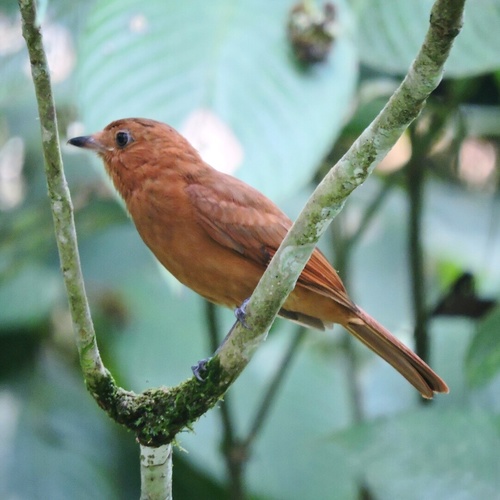
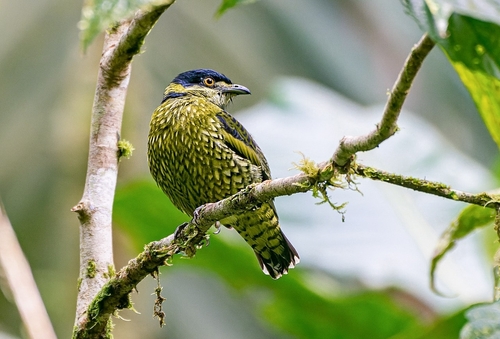
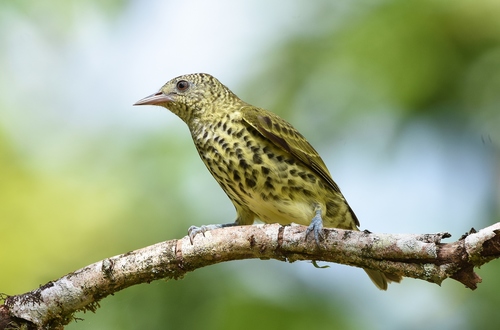
The sharpbill, scientifically named Oxyruncus cristatus, is a small passerine bird currently classified in its own family, Oxyruncidae. It was previously classified in the family Tityridae. This bird’s range covers mountainous regions of tropical South America and the southern parts of Central America, specifically Panama and Costa Rica. It lives in the canopy of wet forests, and feeds mainly on fruit, along with some invertebrates. It has an orange erectile crest, black-spotted yellowish underparts, and scaled patterns on its head and neck. As its common name suggests, it has a straight, pointed beak, which is what gives the species its common name. Sharpbills are most often found in tall, dense forests, but they will sometimes go out to the forest edge. Their diet is primarily fruit, but they also eat insects. To get insect larvae, they hang upside down from twigs. They also travel in mixed-species feeding flocks alongside ovenbirds, tanagers, woodpeckers, and cotingas. This species has a polygamous breeding system, where closely grouped males display from a lek. The female sharpbill builds the species’ nest, which is a small cup-shaped structure placed on a slender branch. Chicks are fed by regurgitation.