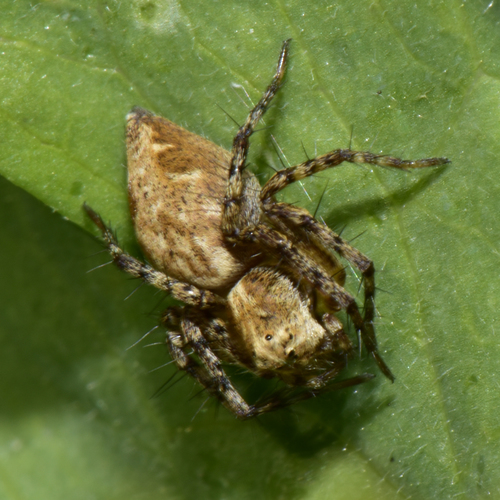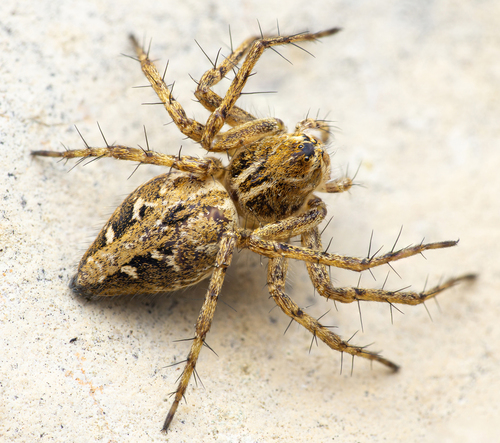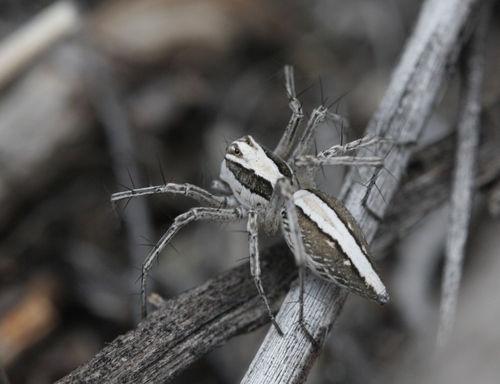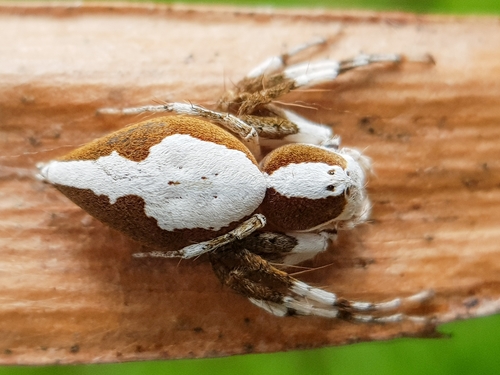
About Oxyopes javanus Thorell, 1887
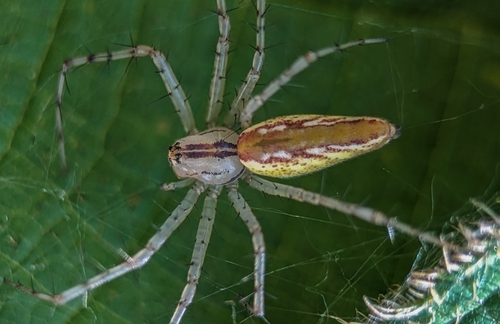
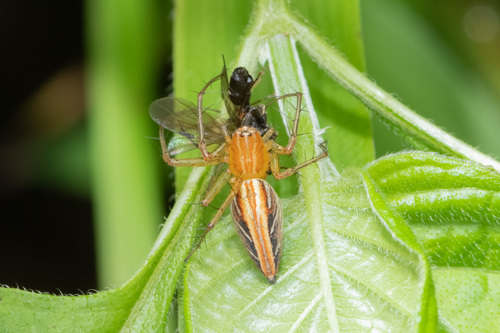
Oxyopes javanus Thorell, 1887 displays clear sexual dimorphism; females can be distinguished from males by both size and morphological traits. This species has a broad distribution across Asia, with recorded occurrences in India, Nepal, Bangladesh, Thailand, Indonesia (Java), the Philippines, and China. It is commonly found in agricultural environments, especially rice fields and corn plantations. Oxyopes javanus occurs primarily in agricultural ecosystems, where it acts as an important biological control agent. It is particularly abundant in corn and rice fields, where it is the numerically dominant predator of economically important pest species. As a diurnal hunter, it actively moves across the vegetational canopy of crop plants, and is remarkably agile, leaping accurately from stem to stem. It is an effective predator of corn borer larvae and other lepidopteran pests, so it is valuable for natural pest control in agricultural systems. For reproduction, the species has an XX-XO sex-determination system: females have 24 chromosomes (22 autosomes + XX), while males have 23 chromosomes (22 autosomes + XO). This makes males heterogametic and females homogametic for sex determination.