About Oxymeris maculata (Linnaeus, 1758)
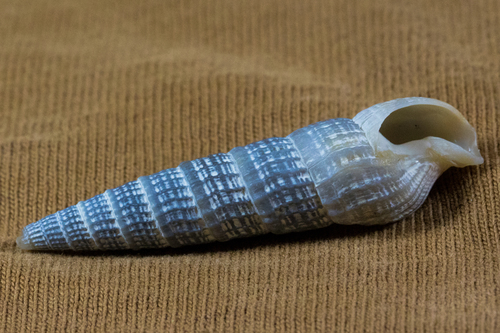
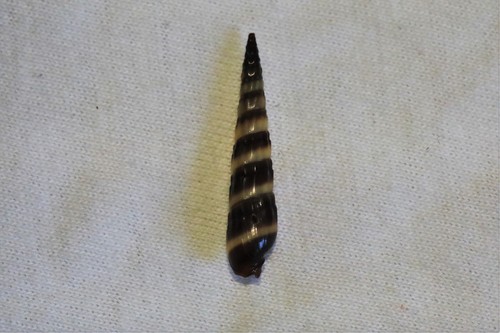
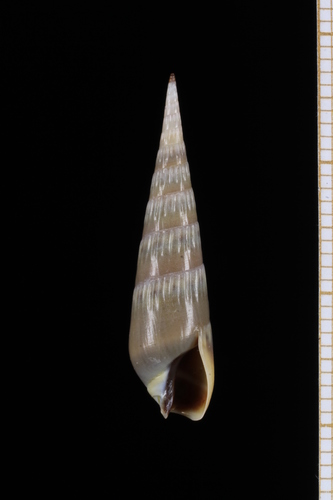
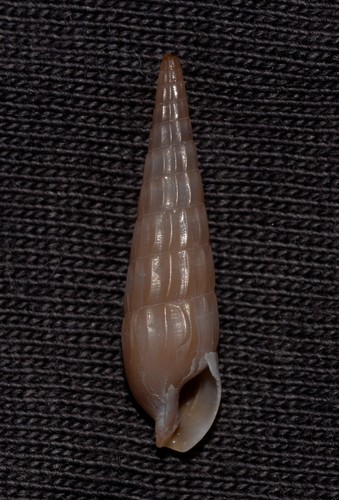
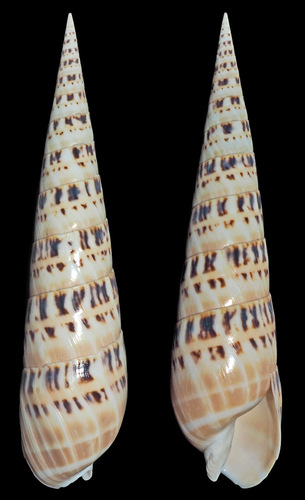
Oxymeris maculata (Linnaeus, 1758) has a cream-colored shell marked with dark rectangular spots that run across its spiral structure. It is the largest species in the Terebrid family, with an average shell height of 16 centimeters, and individuals can grow up to 27.4 centimeters. This species preys on smaller gastropods, echinoderms (including the Crown of Thorns sea star), and polychaete worms. It is one of multiple species in the Terebridae family that has lost its venom ducts. Oxymeris maculata occurs in the tropical Indo-Pacific region, with recorded locations including waters off Aldabra, Chagos, Madagascar, the Mascarene Basin, Mauritius, and Tanzania. It is also found in the Pacific Ocean off Mexico, Papua New Guinea, and Hawaii; in Hawaii, it occurs off local beaches at sites including Waimānalo, Kahe Point, and Honokōhau. Humans sometimes collect Oxymeris maculata to eat the snail inside its shell. In South Pacific cultures, its shell has also been used as a boring tool. Its common name, marlinspike, comes from its shape, which resembles the nautical tool used for splicing ropes.