About Oxalis violacea L.
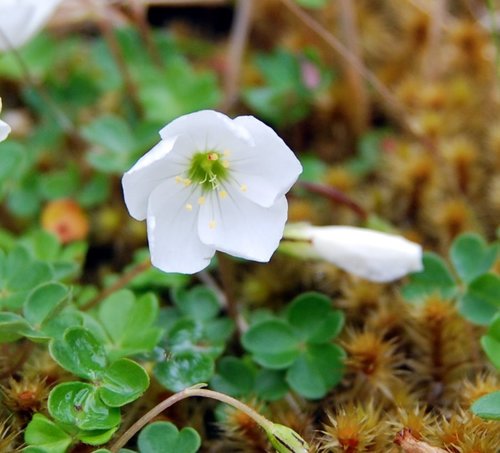
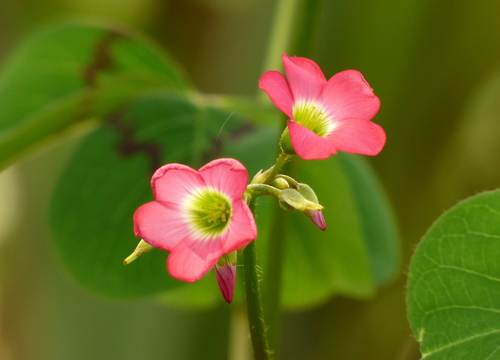
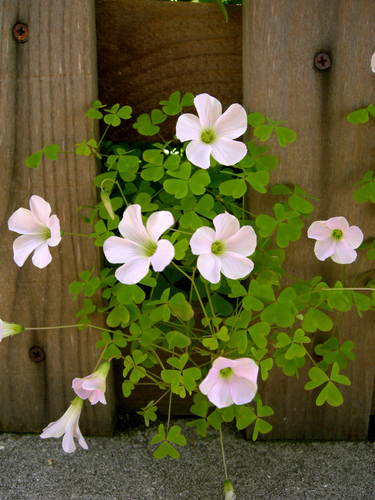
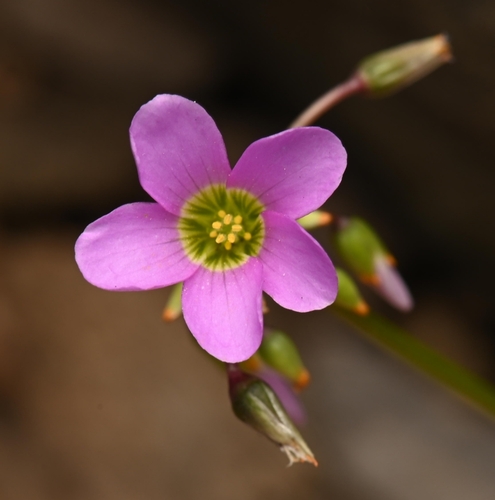
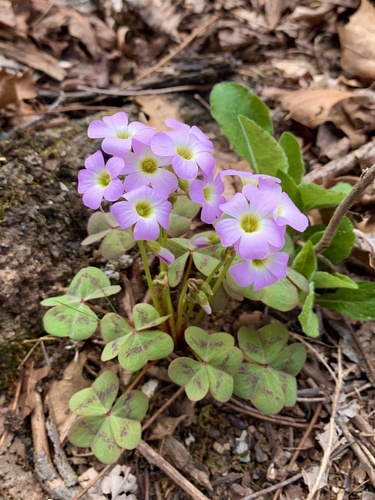
Oxalis violacea L. emerges in early spring from an underground bulb. It produces leaf stems 7–13 cm (2+3⁄4–5 inches) tall, and umbels (flower clusters) that hold up to 19 flowers, borne on stems 9–23 cm (3+1⁄2–9 inches) tall. Its leaves are three-part, with individual heart-shaped leaflets. The plant looks similar to small clovers like the shamrock. It bears lavender to white flowers 1–2 cm (1⁄2–3⁄4 inches) wide, with white to pale green centers, that sit above the foliage. Flowering occurs in April or May, rarely extending to July; with rain, it sometimes produces additional leafless flowers from August to October.
This species is native to much of the United States, ranging from the Rocky Mountains east to the Atlantic Ocean and Gulf of Mexico coasts, and also grows through Eastern Canada. It tends to grow in clustered colonies in open damp woods, along stream banks, and in moist prairies.
Native American peoples including the Cherokee and Pawnee used Oxalis violacea as a medicinal plant.
Oxalis violacea is cultivated as an ornamental plant. It is used as a flowering groundcover or perennial in traditional gardens, native plant gardens, and natural landscaping projects. It spreads rapidly via runners and bulbs. In garden settings, it prefers partial shade and moist conditions.