About Oxalis triangularis A.St.-Hil.
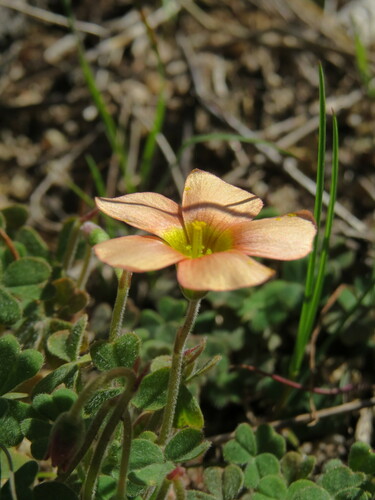
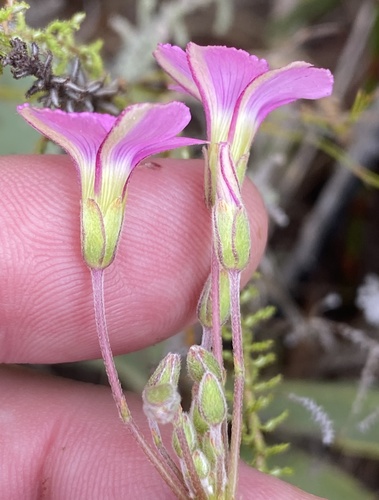
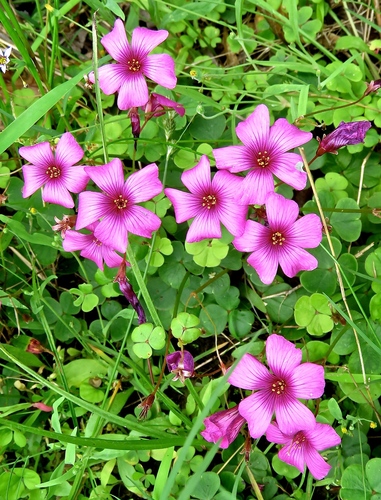
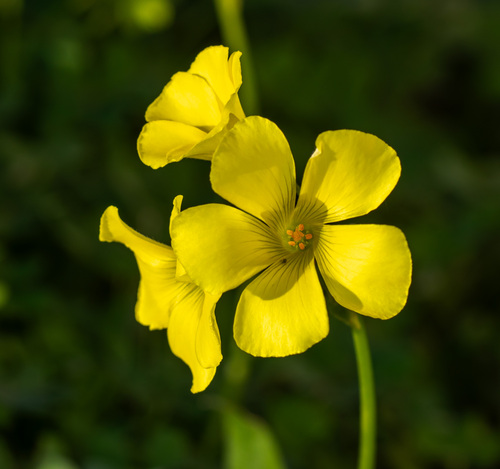
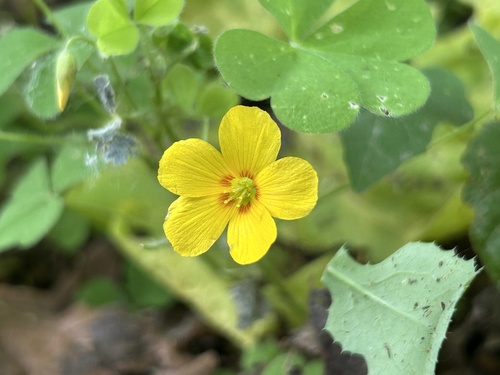
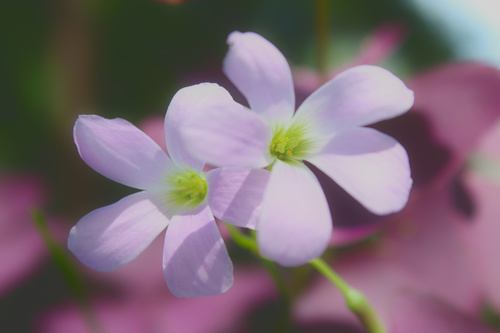
Oxalis triangularis A.St.-Hil. (common name purpleleaf false shamrock when referring to its subspecies O. triangularis subsp. papilionacea) is a perennial plant that grows up to 50 cm (20 in) tall and wide. It has no aerial stem; leaves grow from long petioles that emerge at ground level from a tuberous rhizome. The rhizome is 5 cm long, over 10 to 15 mm in diameter, and completely covered in scales. Each leaf is made up of three sessile leaflets, which are obtriangular to obovate-triangular, glabrous, and arranged on the same plane perpendicular to the petiole. The petiole is soft, whitish, and 15 to 25 cm long. Wild type plants have green leaf blades, but purple-leaved cultivars have been selected for horticultural use. This plant’s flowers have five densely hairy sepals, which are 5 to 5.5 mm long, narrow, and slightly reddish at the tip. There are five white oblong-lanceolate petals, about 2 inches long; the stamens and style are also densely hairy. Flowering occurs from spring to autumn. The subspecies O. triangularis subsp. papilionacea is hardy down to −5 °C (23 °F) in mild and coastal areas of Britain, and has won the Royal Horticultural Society's Award of Garden Merit. The original species is native to several South American countries: Brazil, Bolivia, Argentina, and Paraguay. It is an introduced neophyte in the U.S. states of Florida and Louisiana, and is also widely found in East India, where it grows abundantly in the states of Nagaland and Manipur. For cultivation, Oxalis triangularis needs bright indirect sunlight and prefers a cool indoor temperature of 15 °C (59 °F). It can tolerate higher indoor temperatures, but prolonged exposure to temperatures over 27 °C (81 °F) will cause it to enter dormancy prematurely and/or develop a “tired” appearance. It grows best in average potting soil with good drainage; when planted outdoors, it does best in humus-rich, well-drained soil. In regions that experience frost, it is typically grown indoors to avoid frost damage. Mature plants should be cut back to soil level every 3–5 years, either in early summer or during their dormancy period. Young plants should be cut back to soil level every year in early summer or during dormancy until they reach maturity. Water only when the top layer of soil looks dry, and do not water during the winter. No fertilizer is needed before flowering; after flowering, appropriate fertilizer can be added. While plants primarily need nitrogen, phosphorus, potassium, and easily absorbed trace elements support longer, more abundant blooming. When grown in a flowerbed, a small dose of multi-component fertilizer applied during the flowering period is also recommended. The main challenge in managing frost-resistant oxalis is preventing uncontrolled spread. When the plant’s fruit ripens, it cracks open and ejects seeds over a significant distance, so this species should not be planted near vegetable beds.