About Oxalis tetraphylla Cav.
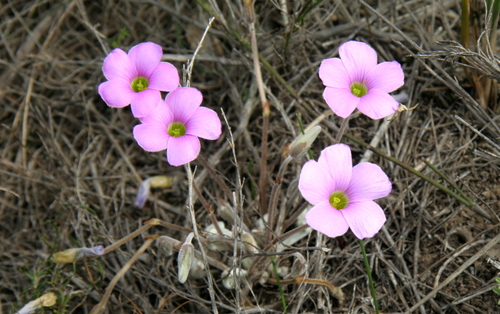
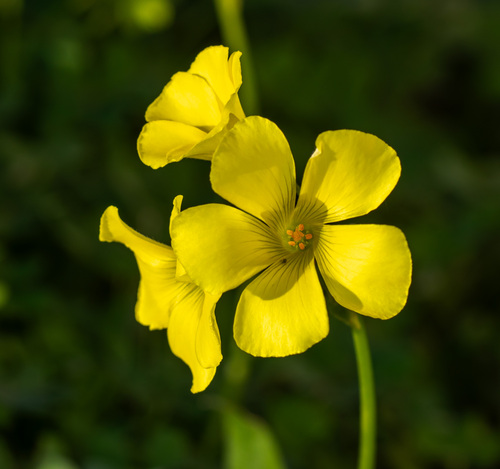
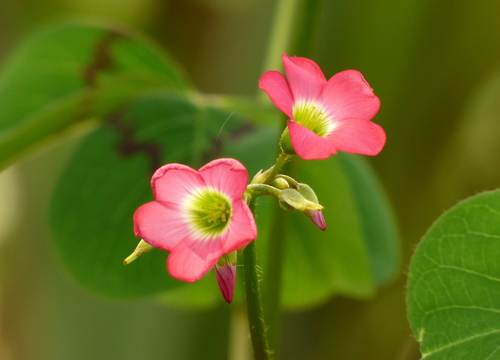
Oxalis tetraphylla Cav. is a bulbous herbaceous perennial plant native to Mexico. It is frequently traded under its scientific synonym Oxalis deppei. It is sometimes sold as lucky clover or shamrock, though it is not actually a member of either of those groups. In wild or feral populations, it is often called four-leaved wood-sorrel, named after its family Oxalidaceae. Other English common names include Lucky Clover, Four-Leaf Sorrel, Four-Leaf Pink-Sorrel, and more. It has also been referred to as "the iron cross plant" or "oxalis iron cross" because its leaves loosely resemble the iron cross symbol. This name was never a traditional folk name, and has fallen out of use due to the harmful political associations linked to the symbol. It belongs to the same genus as common wood-sorrel (Oxalis acetosella). There are three recognized wild variants: the autonym var. tetraphylla, distributed across the Mexican states of Veracruz, México, Morelos and Michoacán; var. mexicana, native to the Hidalgo and Guerrero regions; and var. guerreroensis, native to Oaxaca, Guerrero, Michoacán and Colima regions.
Oxalis tetraphylla var. tetraphylla is the variant most commonly cultivated as an ornamental plant, grown either in containers or as garden ground cover. The other two variants are very similar, with above-ground green growth and flowers that are practically indistinguishable to the eye. All variants of this plant are edible; the flowers and leaves have a sharp lemon flavor. However, oxalic acid present in the plant can interfere with the body's absorption of certain nutrients, especially calcium, so consuming large amounts can be harmful. This plant grows in hardiness zones 7 to 10, heat zones 8 to 9, and climate zones 7 to 24. It is a bulbous perennial that propagates via bulb division or seeds. It tolerates full sun or partial sun, and cannot grow in shade. It has average water requirements. It requires well-drained soil, as soggy conditions can cause bulb rot. It will grow in chalk, clay, loam, or sandy soil types, and tolerates soil pH from 6.1 to 7.8, ranging from acid to alkaline; lower acidity reduces nutrient uptake. Additional fertilizer is usually unnecessary, and only required for plants growing in nutrient-poor soil or small containers. When fertilizing, use slow-release fertilizer when the plant is not dormant, or NPK 5-10-5 fertilizer in late spring to encourage blooming. Mature plants reach 15 cm to 30 cm (6 inches to 1 foot) in height, and spread 10 cm to 15 cm (4 inches to 6 inches) wide. Bulbs should be planted 7 cm (3 inches) deep. Common garden uses include edging, ground cover, patio planting, and container growing. If planted in early spring, it will grow and flower throughout spring and summer. Some bulbs can survive cold winters, but in areas with deep frost, bulbs should be stored in a cool, dry place over winter and replanted in spring. Bulbs will multiply by autumn.