About Oxalis oregana Nutt. ex Torr. & A.Gray
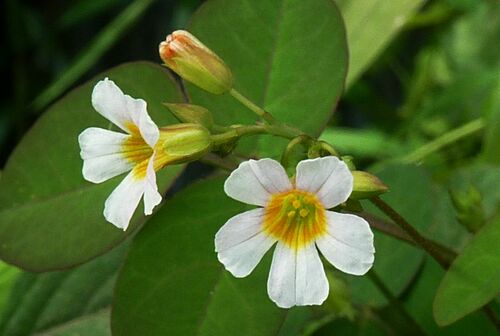
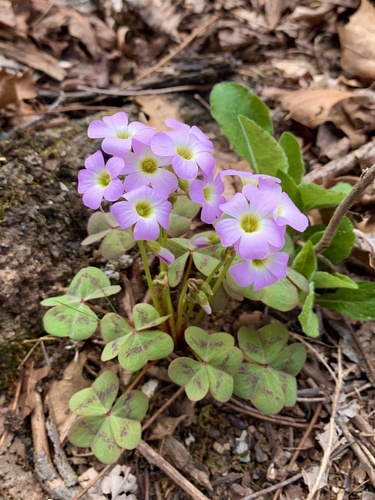
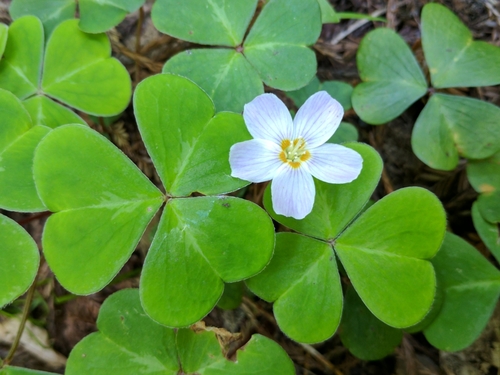
Oxalis oregana Nutt. ex Torr. & A.Gray is a short herbaceous perennial plant with erect flowering stems that grow 5 to 15 centimeters tall. It produces three heart-shaped leaflets, each 1 to 4.5 centimeters long with purplish undersides, borne on stalks that measure 5 to 20 centimeters long. Its inflorescence is 2.4 to 4 centimeters in diameter, with five petals and five sepals, and ranges in color from white to pink. The hairy, five-chambered seed capsules are egg-shaped and 7 to 9 millimeters long, and the seeds inside are almond-shaped. This species spreads via a scaly rhizome, leading to patches of varying size. It can be found growing throughout moist forest understories, with a native range that extends from southern Humboldt County, California to southwestern British Columbia.
Unlike its close relative Oxalis smalliana, O. oregana consistently bears white flowers and displays typical single sequence haplotypes in genetic analyses. In regions where the two species overlap, O. oregana reaches peak flowering roughly one month later than O. smalliana.
The Cowlitz, Quileute and Quinault peoples eat the leaves of Oxalis oregana. Like spinach, the leaves contain mildly toxic oxalic acid, a compound that gets its name from this plant genus. For people who do not have oxalate-related health conditions, the leaves are safe to eat in small amounts.