About Oxalis L.
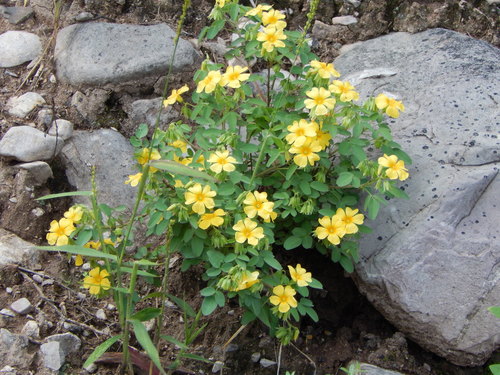
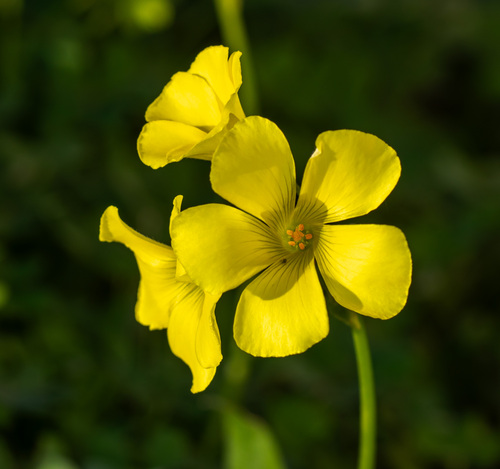
Oxalis pes-caprae flowers are actinomorphic. They have a calyx made of five free or slightly fused sepals, a sympetalous corolla of five fused petals, an androecium of ten free stamens arranged in two ranks, and a compound pistil. Native populations in South Africa are heterostylous. In long-styled plants, the stigma sits above the two ranks of stamens; in mid-styled plants, the stigma sits between the two ranks of stamens; and in short-styled plants, the stigma sits below both ranks of stamens. In the plant's non-native range, individuals mostly reproduce vegetatively. Many non-native populations only have one style length, and plants from these populations never produce seed. Like most African Oxalis species, O. pes-caprae produces adventitious subterranean propagules. Botanically, these propagules are true bulbs, which is an unusual trait among dicotyledons. O. pes-caprae produces large numbers of small bulbs, while most other African Oxalis species produce fewer, larger bulbs. This plant is palatable, and is reasonably harmless to humans and livestock when eaten in modest quantities. In South Africa, it is a traditional ingredient in dishes such as waterblommetjiebredie, also called water flower stew. The plant has been used in various ways as a source of oxalic acid, as food, and in folk medicine. Raw bulbs of the plant have been used to treat tapeworm and potentially other intestinal worms. The plant has also been used as a diuretic, a use that may be hazardous. The plant's fleshy lateral underground runners can be eaten raw or boiled, and are often served with milk. Its golden petals can be used to produce a yellow dye.