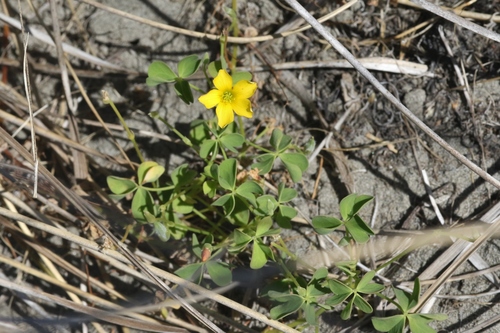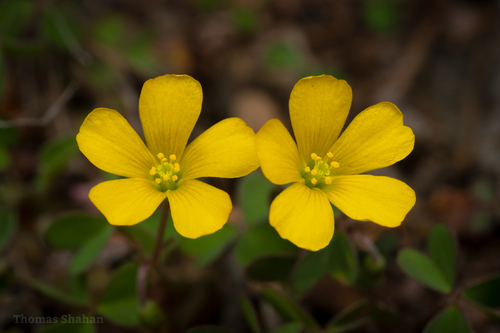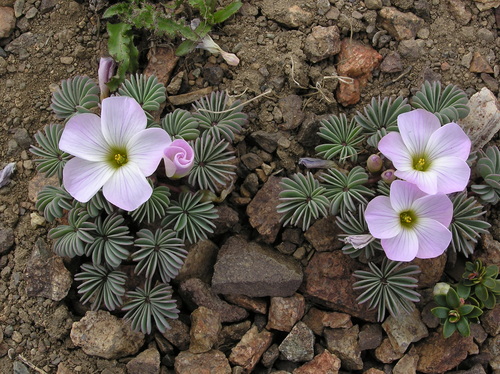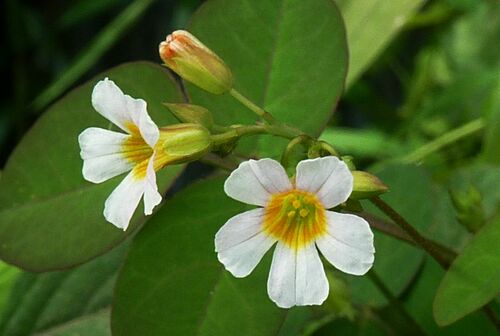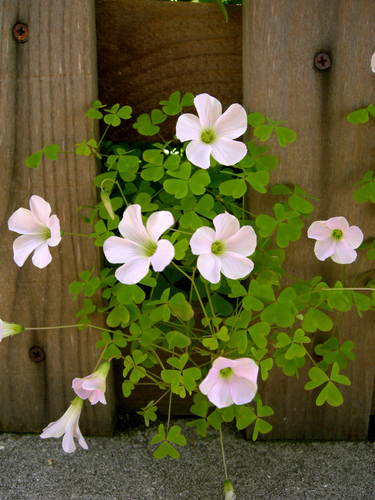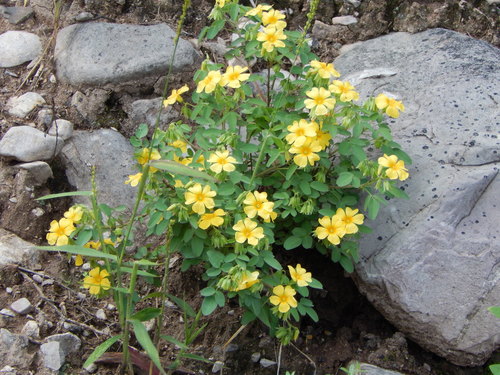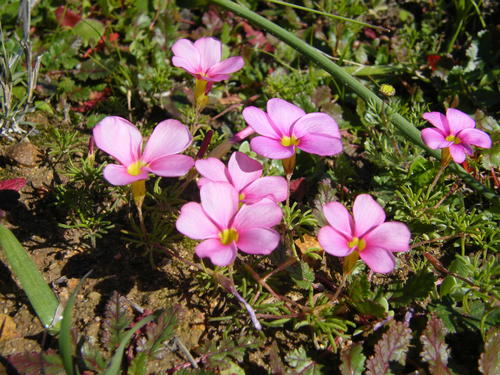
About Oxalis glabra Thunb.
Because of its attractive ornamental flowers, Oxalis glabra Thunb. is commonly planted in gardens, but it is often classified as a weed. It is very difficult to eradicate due to its underground growth habit. A single bulb can grow into many separate plants and produce many more bulbils. The small size of its bulbs makes them hard to detect and easy to spread. This plant grows in a dense carpet that can outcompete and displace native species. If it is introduced to a disturbed plant community, it will stop native plants from re-establishing there. Destroying the plant's aboveground shoots is not effective for eradication, and hand digging also fails because bulbs easily break apart and remain in the soil. Glyphosate, diuron, and sulfonyl urea herbicides are the most effective treatments for eradicating Oxalis glabra. Herbicides should be applied when flowering is first observed, because the plant's bulbs are exhausted at this growth stage. Members of the genus Oxalis produce oxalic acid, a toxic compound. In low concentrations, oxalic acid is harmless, and it even occurs naturally in common cultivated foods including broccoli, spinach, and Brussels sprouts. In higher concentrations, oxalic acid can cause harmful effects that lead to hypocalcemia, which is a concern for farmers with grazing livestock. Oxalis glabra is native to Cape Province, southern Africa, and is now concentrated in southwestern Australia. It occurs in the Darling Scarp from Bunbury to Augusta, inland to Narrogin and Toodyay, and also grows in the Avon Wheatbelt, Geraldton Sandplain, Jarrah Forest, Swan Coastal Plain, and Warren. Its bulbs are easily spread by water, contaminated soil, and interactions with organisms such as ants. Although Oxalis glabra is widespread across Western Australia, no seeds of this species have been found in the region. It establishes most successfully in already disturbed environments.