About Oxalis enneaphylla Cav.
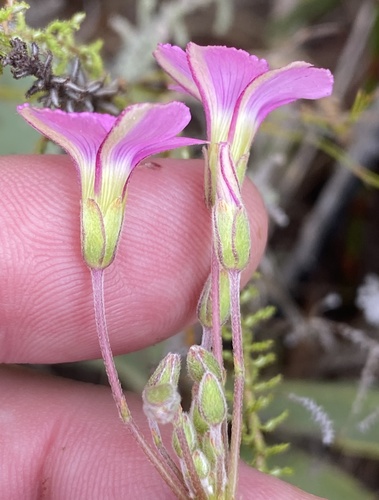
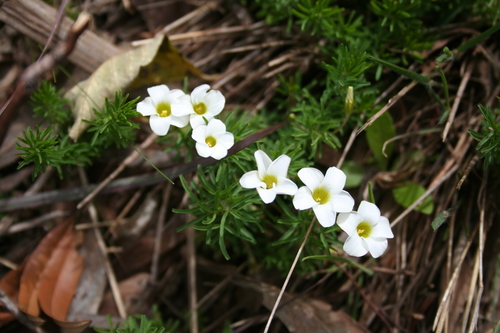
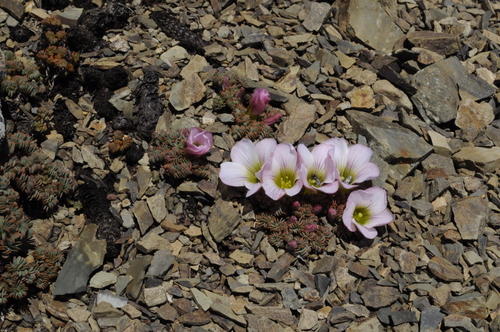
Oxalis enneaphylla Cav., commonly known as scurvy grass, is a rhizomatous alpine perennial herbaceous plant that flowers in late spring and summer. It is native to Patagonian grasslands in southern Chile and Argentina, as well as the Falkland Islands. This small plant grows 7 cm (2.8 in) tall and 10 cm (3.9 in) wide, with slightly fleshy, hairy blue-grey leaves. The leaves are edible, with a sharp taste caused by their high oxalic acid content, and are rich in vitamin C. Its species epithet enneaphylla derives from Greek words meaning nine (ennea) and leaf (phyllon). The plant produces five-petalled almond-scented flowers, which are pink fading to white. Flowers are hermaphrodite and pollinated by Lepidoptera, which includes moths and butterflies. Its common name scurvy grass comes from its vitamin C-rich leaves; it is not closely related to the other plant called scurvy-grass (genus Cochlearia), and neither of these plants are true grasses belonging to the family Poaceae. Sailors rounding Cape Horn ate these leaves to prevent scurvy. This use is referenced in an extract from the journal of Syms Covington, who sailed aboard HMS Beagle with Charles Darwin. In his description of the Falkland Islands, Covington refers to Oxalis enneaphylla as "wild thyme", writing: "While laying here we found it very squally, and at times very cold. The island is in general mountainous. Not a single tree to be seen but there are low brushes with red berries which are very good eating. Here are bullocks horses and pigs that run wild, rabbits, wild geese and ducks and most excellent snipe shooting on the marshy ground and long grass, of which the island in general has very little else. Likewise there is the tea plant, which bears very sweet berry, and wild thyme which we used as tea, and is very good and much more plentiful than the former." Oxalis enneaphylla is cultivated in temperate regions, and is well suited for planting in rockeries or alpine gardens. Both the species and its hybrid cultivar 'Ione Hecker' have been awarded the Royal Horticultural Society's Award of Garden Merit.