About Oxalis debilis Kunth
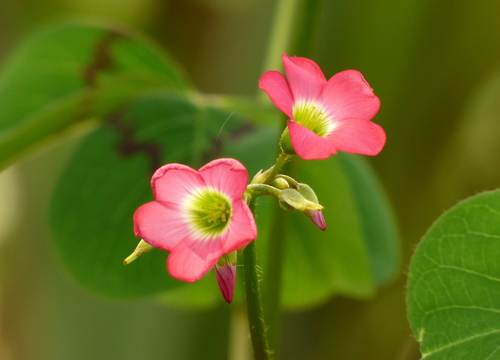
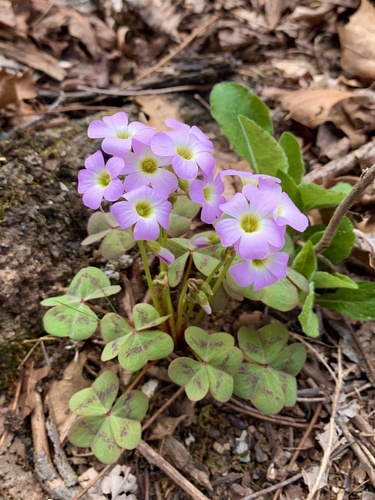
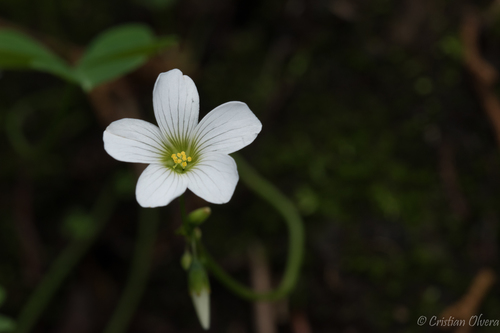
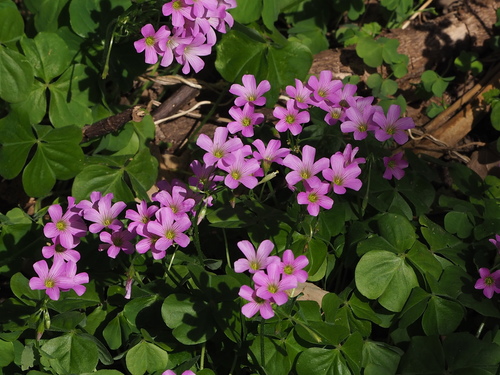
Oxalis debilis Kunth is a bulbous plant that produces fruit in the form of a capsule. Its seeds are projected and have an elastic integument. Plants growing in Europe are sterile, and only propagate via bulbs. Its leaves have a zesty, lemony flavor. Research on naturalizing populations of this species in China has identified two flower morphs, pollen with low viability, and polyploidy. This species is originally distributed in South America, but has become cosmopolitan and can be found on all continents except Antarctica. It grows in both temperate and tropical areas. There are two recognized varieties of Oxalis debilis: Oxalis debilis var. corymbosa (DC.) Lourteig, commonly called large-flowered pink-sorrel, which is also synonymized as O. corymbosa; and Oxalis debilis var. debilis cultivar 'Aureoreticulata', sometimes written as 'aureo-reticulata'. This cultivar has attractive variegated leaves and pinkish purple flowers. It is also called 'Gold Veined Oxalis' or Yellow Vein Oxalis, named for its distinct yellow-veined foliage. The characteristic variegated yellow vein pattern of this cultivar is caused by infection with a begomovirus, designated OxYVV, which is transmitted by the whitefly Bemisia tabaci. The Royal Horticultural Society notes that this plant can become a serious weed. Flowers, leaves, and roots of Oxalis debilis are edible. There has been concern that the plant should only be consumed in small amounts, because it contains oxalic acid, which can cause calcium deficiency if eaten in larger quantities. However, studies indicate this concern is exaggerated.