About Oxalis articulata Savigny
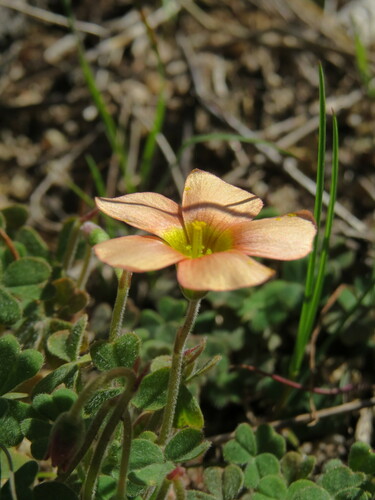
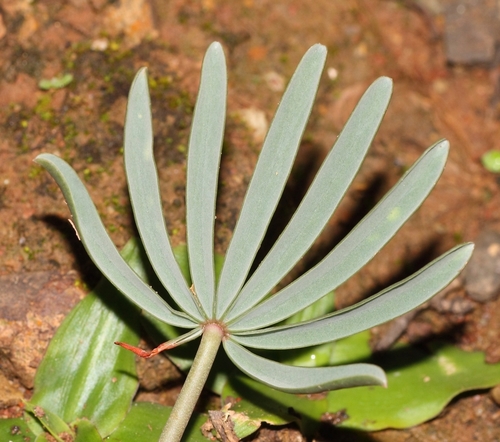
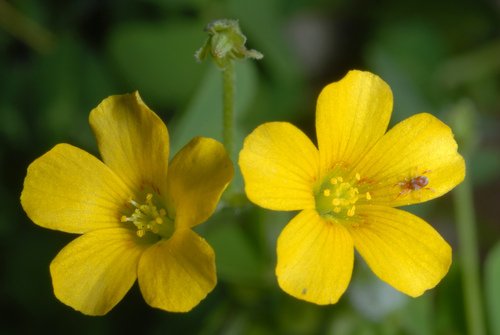
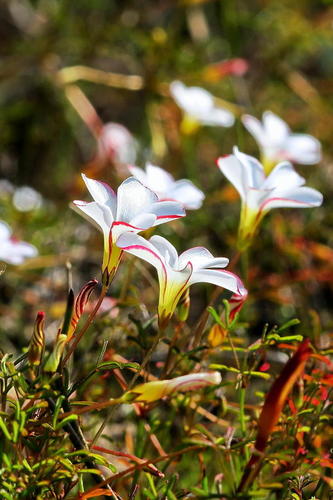
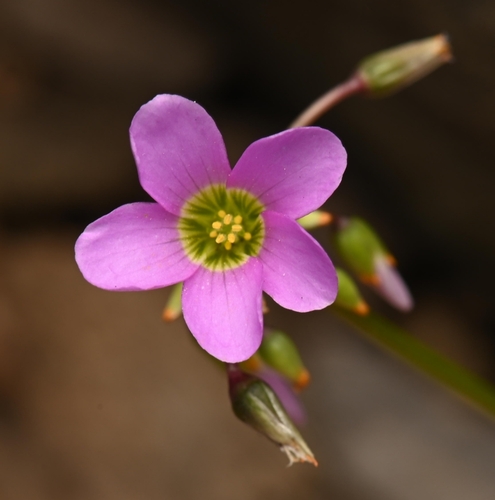
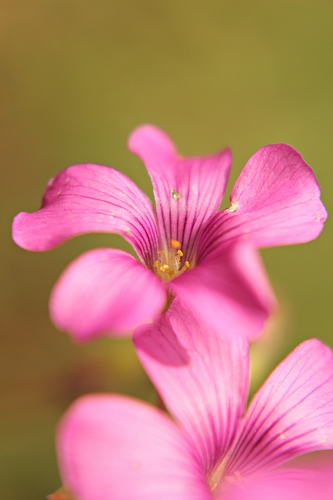
As its common associations suggest, this Oxalis species typically bears pink to violet flowers with petals 10–15 mm long. Numerous tufted leaves grow from the ground in a rosette. At the end of a long, slender petiole that can reach up to 30 cm, 3 generally orbicular leaflets up to 5 cm in diameter spread out perpendicular to the petiole. Each leaflet is obcordate (heart-shaped), with a very finely ciliated margin and a deeply notched apex. The underside of the leaflets usually has clearly visible orange granulations. This species has plants that grow from a thick, woody, irregularly nodulate-segmented rhizome, which often retains persistent, thickened, woody petiole bases. Flowers are borne in clusters of 3 to 12 in umbelliform cymes, and less commonly in irregular cymes. This species is a perennial plant that typically grows up to 45 cm tall and 2 cm in diameter. It spreads via rhizomes that can reach 15 cm long to form colonies. It is hermaphrodite, and only infrequently produces seeds inside long, cylindrical capsules. Oxalis articulata contains large amounts of ascorbic acid, and is eaten as a vegetable by people living in Jharkhand, India. It can be used as ground cover in green zones to suppress weed growth, reducing the need for herbicide. This effect comes from allelopathic leachates in the leaves and root exudates of living Oxalis articulata plants, which have significant inhibitory activity against the growth of other plants. Oxalate extracts from this species' leaves have been found to have anti-fungal properties. Oxalis articulata is grown as an ornamental plant in China. It is not drought tolerant, so its growing soil should be kept consistently moist. It grows best in acidic or light soils. It is more competitive than other species in the Oxalis genus, and can tolerate plant beds that are loosely populated with other vegetation. It also thrives in disturbed ground. While it is a hardy plant, it grows best in warmer areas. It flowers continuously throughout the warmer months and enters dormancy after the first frost. When kept out of direct sunlight, its flowers roll up into a tube-like shape. It is extensively naturalized in southeastern Australia, specifically in the crescent-shaped temperate strip stretching from South Australia to southeastern Queensland.