About Oxalis alpina (Rose) Rose ex R.Knuth
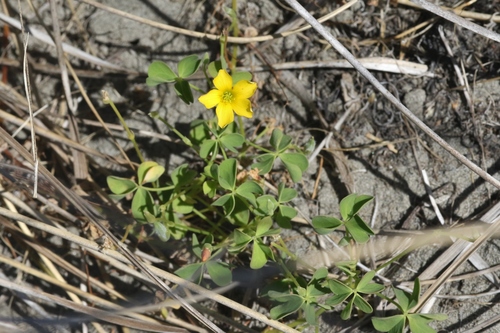
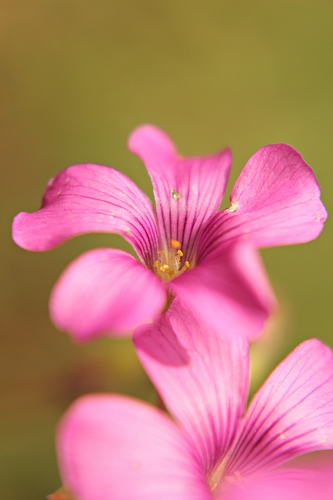
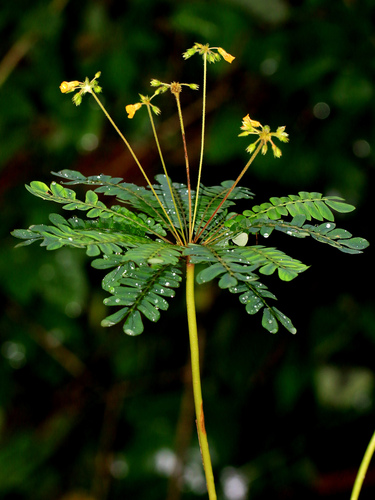
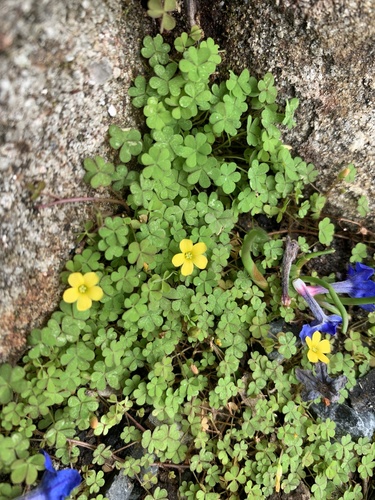
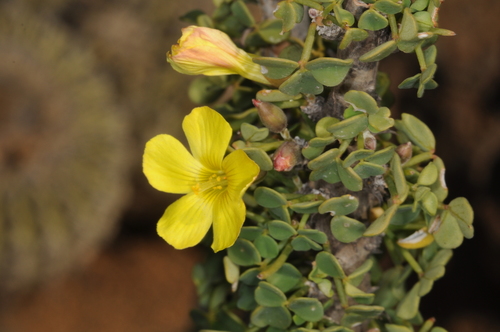
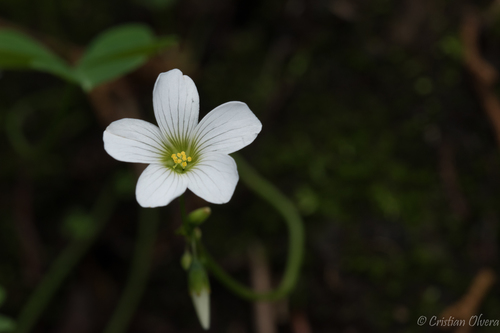
Oxalis alpina (Rose) Rose ex R.Knuth is a perennial herb that regrows annually from an underground bulb, and typically flowers between July and September. This species is tetraploid. Its plants are conspicuous, producing 1 to 7 flowers arranged in an umbel inflorescence. The leaves are green, clover-like, and bear three distinct heart-shaped lobes. Oxalis alpina is morphologically similar to Oxalis violacea, but can be distinguished by the orange projections at the tips of its sepals: Oxalis alpina has two separate orange projections, while these projections are fused in Oxalis violacea. The flowers of Oxalis alpina are perfect, with a superior ovary, ten stamens, and one pistil made up of five carpels. The fruits of Oxalis alpina are dehiscent capsules that disperse seeds by exploding when mature, projecting seeds into the surrounding immediate area. Oxalis alpina has heterostylous flowers, and populations exhibit either tristyly or distyly. Distylous populations are thought to have evolved from tristylous ancestors, and pollen transfer can still occur between tristylous and distylous O. alpina flowers. Documented occurrences of Oxalis alpina range from Guatemala to the southwestern United States, including the sky island region of southeastern Arizona and northern Mexico. It is considered somewhat rare in the United States, with only a small number of populations across New Mexico, occurring only in the eastern two-thirds of Arizona, and having been recorded a few times in Navajo County. Different populations of this species have varying reproductive systems. Isolated climate conditions since the Pleistocene have promoted these differences, even between adjacent mountain ranges within Arizona. Oxalis alpina occurs at high altitudes in temperate deciduous forests, pine-oak forests, and temperate coniferous forests. Populations in Arizona have been recorded at elevations between 5500 and 9000 feet. Oxalis alpina most often grows among rocks in moist environments.