About Ovalipes ocellatus (Herbst, 1799)
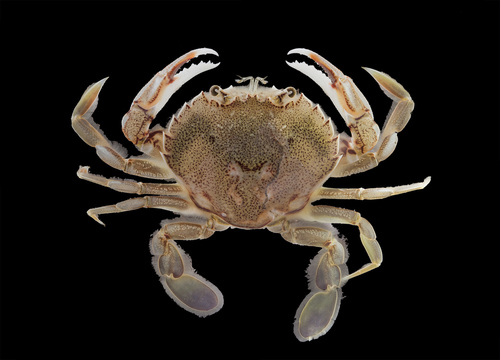
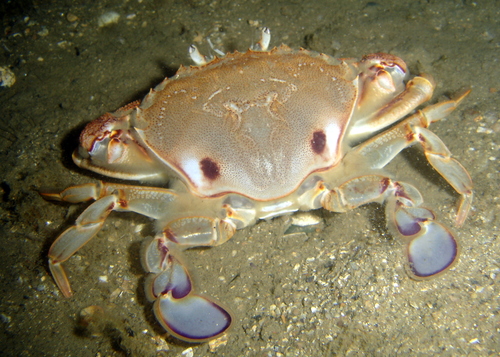
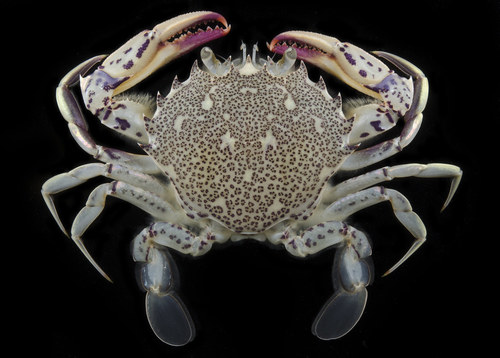
The carapace of Ovalipes ocellatus is slightly wider than it is long: measuring 8.9 centimetres (3.5 inches) across, and 7.5 cm (3.0 inches) in length. The carapace is yellow-grey or light purplish, marked with leopardlike clusters of purple dots. It produces limited iridescence that it uses as a form of signalling. This species is distributed along the Atlantic coast of North America, ranging from Canada to Georgia. It is probably the only Ovalipes species that is common north of Virginia; to the south of Virginia, it is replaced by the species Ovalipes stephensoni. Ovalipes ocellatus goes through five zoeal (larval) stages during its life cycle. At 25 °C (77 °F) and a salinity of 30‰, these stages last a total of 18 days. At 20 °C (68 °F) and the same 30‰ salinity, the total duration of the five stages is 26 days. Ovalipes ocellatus is a nocturnal species that often buries itself in sand. It has been described as vicious, and noted as the crab most likely to pinch a wader's toes.