About Otomys irroratus (Brants, 1827)
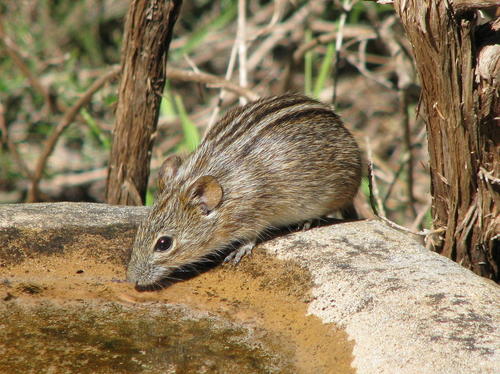
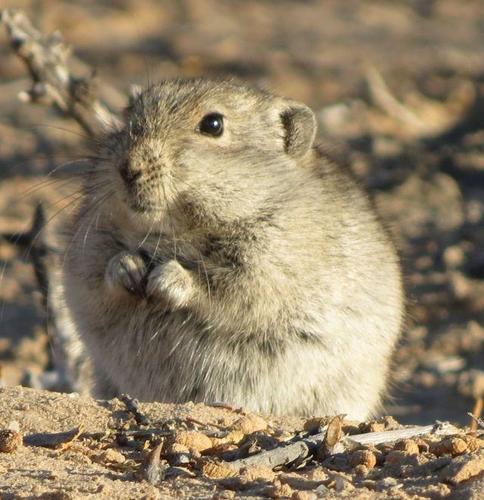
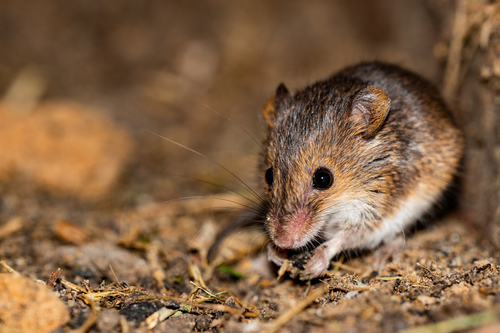
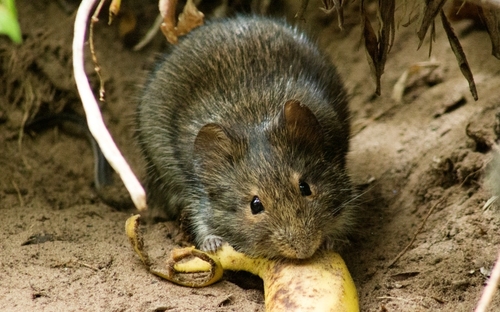
Otomys irroratus, commonly known as the Southern African vlei rat, is a large-sized rat with dense, continuously replaced shaggy fur. It has a large head, small ears, a short tail, gray, brown, or black dorsal fur, and paler or darker grey ventral fur. All of its digits bear claws, and the hind claws are longer than the fore claws. The species has an average head-and-body length of around 160 mm (6.3 in), an average tail length of around 100 mm (4 in), and both males and females have a similar mean body mass of 143.7 g.
The range of the Southern African vlei rat extends from the far southwestern Cape of South Africa, around the southern and eastern coast and adjacent interior, to subtropical regions in southern Natal, including Lesotho within this portion of its range. Further north, the species no longer occurs along the actual coast, but its inland range extends north into tropical areas nearly to the northern boundary of the Transvaal, including parts of Eswatini. An apparently isolated population occurs even further north, in tropical eastern Zimbabwe and adjacent Mozambique. Its habitats include temperate low-altitude swamps and grassland, as well as subtropical and tropical high-altitude grassland, swamps, and plantations. It is a terrestrial species that lives above ground in an open, bowl-shaped nest made of shredded grass, located near marshy areas with dense vegetation.
The Southern African vlei rat is mainly active at dusk and dawn. Most individuals are diurnal, though some show nocturnal activity. The species creates and shares runways through vegetation with other coexisting species, and forages on the green vegetation that makes up its diet.
Most Southern African vlei rats have a promiscuous mating system, though some populations are polygynous. In polygynous populations, females can terminate pregnancy, which may act as a counter-strategy to infanticide. Males and females prefer to mate within their own population, and can discriminate between individuals from other populations using odor cues. Females may give birth up to four times a year, producing 1 to 4 offspring per litter after a gestation period of five to six weeks. Populations in the Eastern Cape breed year-round, while populations in Transvaal mostly breed in August, when food is most abundant.
The young of this species are precocial at birth, and are relatively large compared to the young of other similar-sized rodents. They are born covered in fur, with erupted incisors; this allows them to cling to their mother's nipples as she travels during their first two weeks of life. By the second day after birth, their eyes are open, they can hear acutely, and they are able to eat solid food. Young Southern African vlei rats will consume both their own feces and the feces of other individuals to obtain sufficient nutrients. By day five, they have coordinated body movement. Weaning is typically complete by approximately day 13. The young grow rapidly, reaching 71% of adult mass by 10 weeks old. Females reach sexual maturity at 9 to 10 weeks old, while males mature later. The maximum lifespan of the Southern African vlei rat is 2 years.