About Othos dentex (Cuvier, 1828)
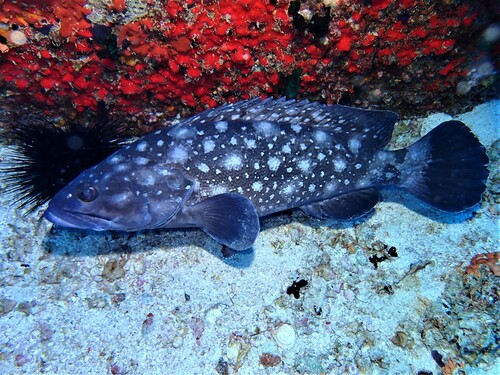
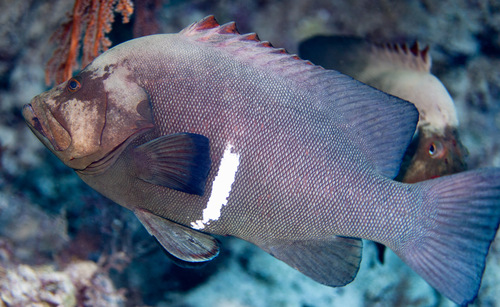
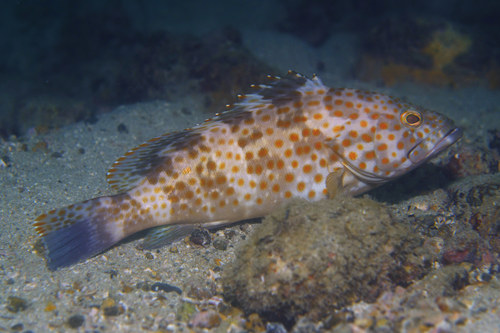
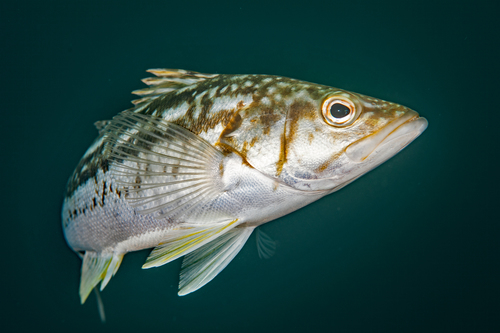
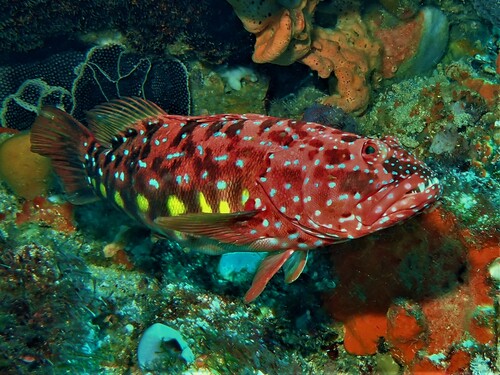
The harlequin fish, scientifically named Othos dentex (Cuvier, 1828), is a diurnal forager with a long life cycle, small home range, and strong site fidelity. It is likely to be harmed by localized human-caused changes and recreational fishing, even though coastal recreational fishing pressure on this species is low. The harlequin fish is native to temperate waters, and occurs on shallow rocky reefs and in caves along the cool coast of south-western Australia. This reef-dwelling species is thought to play an important ecological role in its habitat, as it is a top predator and relatively common in the area. Harlequin fish can live up to 42 years and reach a maximum total length of 75 cm (30 in). A single opaque zone forms annually in the otoliths of O. dentex, so the age of an individual can be determined by counting these zones. Despite their long lifespan, both females and males grow rapidly up to the young age of 4 to 5 years. Males show a slight color change when they reach maturity. Early juveniles are thought to live in crannies and deeper sections of caves, which protects them from nearby predatory piscivorous fish. As juveniles approach mature size, they begin moving throughout the reef. Adult males are typically solitary, and only gather with females during the spawning season. The harlequin fish is gonochoristic, with indeterminate fecundity. It also exhibits batch spawning, a trait that aligns with this species being widely dispersed and low in abundance. It is currently unknown whether juveniles are bisexual early in life; if early bisexuality does occur, it is assumed to disappear early in gonadal development before individuals reach maturity. O. dentex has small testes, which suggests low levels of sperm competition. The spawning season for O. dentex runs from September through March, and peaks between November and January. Indeterminate fecundity over the species' long lifespan, combined with its extended spawning period, plays a key role in egg and larval survival. These factors ensure that most of the many eggs produced each spawning season are released at a time that is favorable for egg and larval development.