About Otatea acuminata (Munro) C.E.Calderón ex Soderstr.
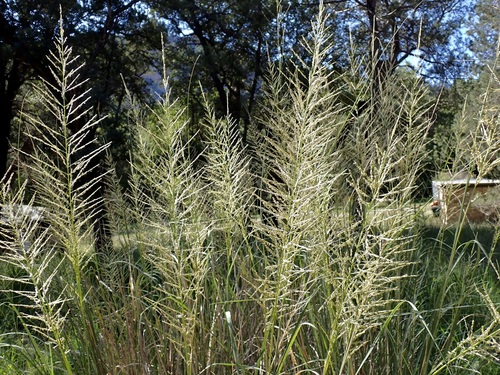
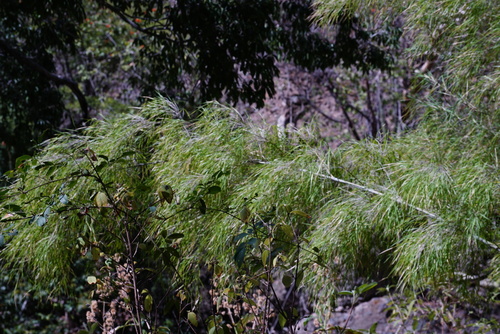
Otatea acuminata, commonly known as Mexican weeping bamboo, is a clumping bamboo species native to central and southern Mexico, as well as Central America. This plant forms thick stands of culms that bear long, narrow leaves. The weight of these leaves causes the long, thin culms to bend, creating the characteristic weeping growth habit that gives the species its common name. In its native habitat, mature clumps can reach 25 feet (7.6 m) or more in both height and width. Otatea acuminata and its cultivars are cultivated as ornamental plants, and are commonly grown in gardens with subtropical or temperate climates, in locations that receive full or partial sun. Once established, this bamboo is drought tolerant, though it still benefits from regular periodic watering and feeding. Mexican Weeping Bamboo grows well in pots, where it reaches around 6 feet (1.8 m) tall. When planted in the ground and given regular water, it can reach 15 feet (4.6 m) or more in height. Propagating Mexican Weeping Bamboo is easy: it can be done by dividing the plant's root ball with a sharp spade. Thinning culms to leave them spaced 1 foot (0.30 m) or more apart creates a particularly delicate appearance. This spacing allows dappled light to pass through the bamboo, and lets the plant sway gracefully in gentle breezes. As a fast-growing clumping bamboo, Otatea acuminata spreads 1–2 feet (0.30–0.61 m) outward each year. It grows well in the climate and soil of Southern California, and can be successfully grown and propagated with very little effort. Unlike many other bamboo species, its leaves do not develop brown tips even when grown in suboptimal conditions.