About Otaria byronia (de Blainville, 1820)
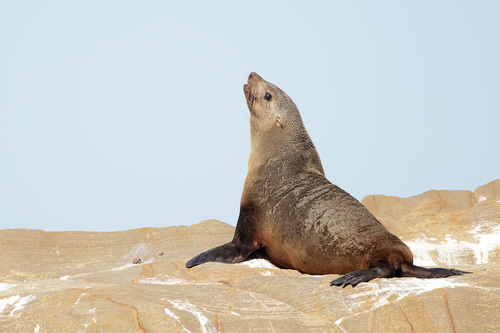
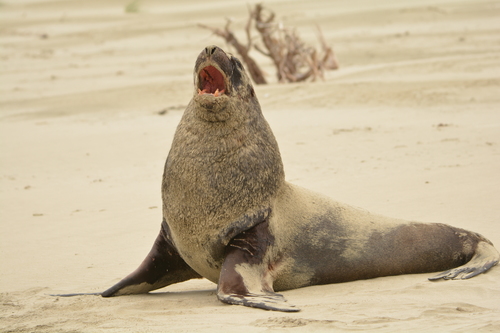
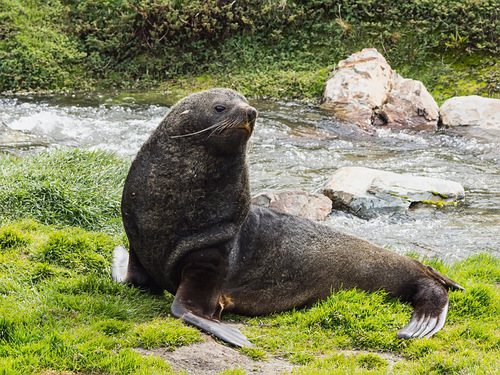
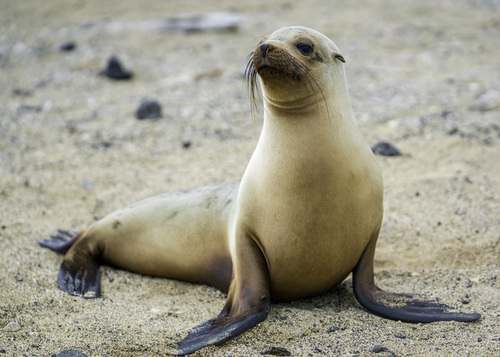
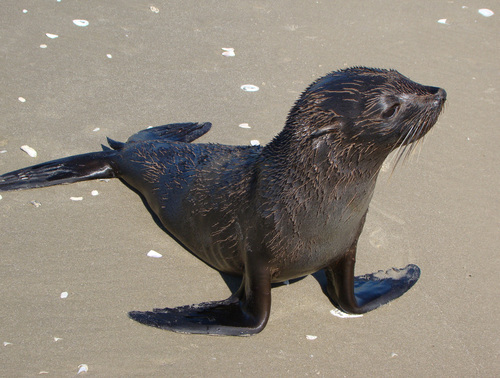
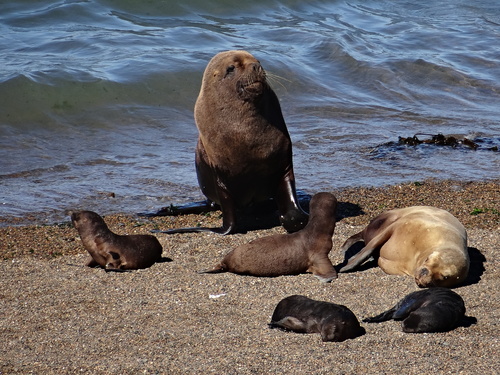
The South American sea lion, Otaria byronia, is one of the largest and most sexually dimorphic species among eared seals. Males reach up to 3 m (9.8 ft) in length and weigh up to 350 kg (770 lb), while females grow to 2 m (6 ft 7 in) in length and 150 kg (330 lb) in weight. Newborn pups are 0.86 m (2 ft 10 in) long and weigh between 12 and 15 kg (26–33 lb). Sexual size differences are already present in newborns and juveniles. Adult males have large heads with short upturned snouts, and long manes that extend to the shoulders. Their fur is primarily brownish: adult males are dark brown, while females are close to yellowish. Pups are born with black fur, which turns reddish-brown after their first molt. This species is found along the coasts and offshore islands of South America, ranging from southern Peru south to Cape Horn, then north to southern Brazil. Well-known breeding colonies are located at Lobos Island, Uruguay; Peninsula Valdes, Argentina; the Beagle Channel; and the Falkland Islands. Some individual sea lions wander as far north as southern Ecuador, but they have never been recorded breeding there. The movement ecology of the South American sea lion remains poorly studied overall, though recent biologging studies have improved understanding of their at-sea movements at certain breeding locations. There is no evidence that sea lions from the Falkland Islands undertake a winter migration. South American sea lions breed on beaches composed of sand, gravel, rock, or pebbles. They can also be seen on flat rocky cliffs with tidepools. Their colonies are typically small and scattered, especially on rocky beaches. When the weather is warm and sunny, individual sea lions space themselves apart from one another within colonies. Their diet includes many fish species, such as Argentine hake and anchovies. They also consume cephalopods including shortfin squid, Patagonian squid, and octopus, plus crustaceans and other invertebrates, with prey selection dependent on local availability. They have even been observed preying on penguins, pelicans, and female and juvenile South American fur seals. Depending on the region, South American sea lions may forage on the ocean floor for slow-moving prey or hunt schooling prey in groups. They have been recorded chasing penguins on land. Once captured, prey is violently shaken and torn apart. South American sea lions have been observed taking advantage of prey driven to the surface by dusky dolphins' hunting activity. South American sea lions are themselves preyed on by orcas and sharks; at Peninsula Valdes, orcas intentionally beach themselves to catch sea lions near the shore.