About Ostrea equestris Say, 1834
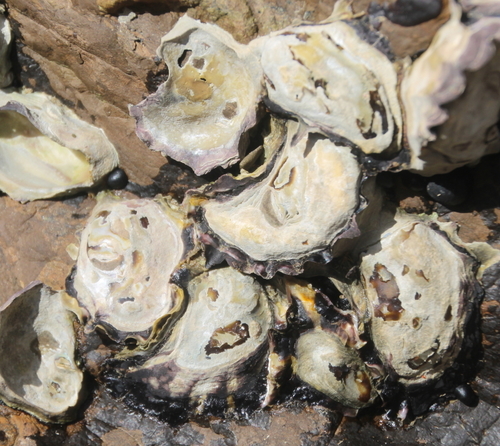
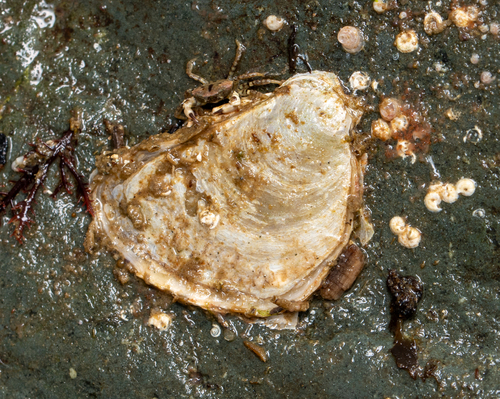
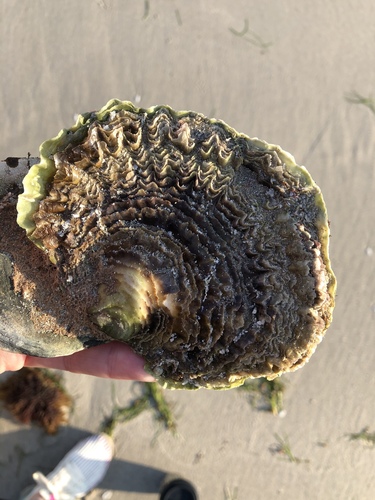
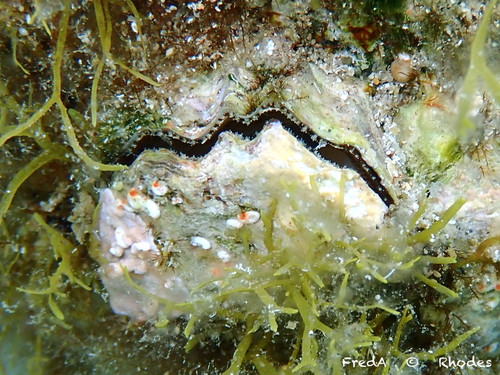
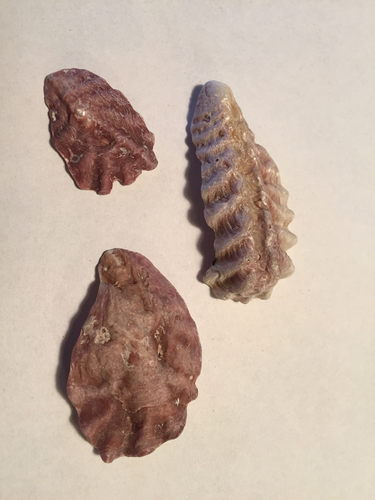
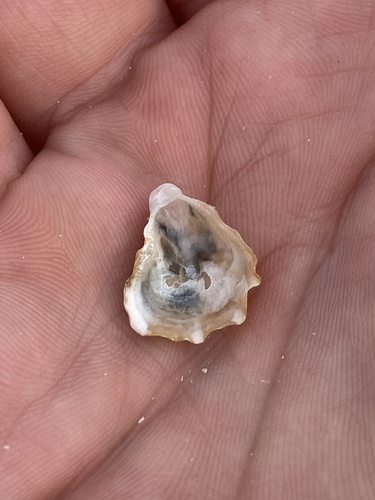
The crested oyster, Ostrea equestris Say, 1834, has an irregular triangular or oval shape, and reaches an approximate length of 5 cm (2 in). Its left valve is deeply concave with a raised margin and anchors to a substrate, while the right valve is somewhat flattened and fits inside the left valve. The valves are thick, with variable surface sculpturing; their whitish base colour is often hidden by mud, algal growth, and encrusting organisms. The interior of the valves is pearly grey or greenish, and has a colourless muscle scar. This characteristic distinguishes it from the much larger eastern oyster, Crassostrea virginica, which has a purple muscle scar.
This species occurs in shallow water along the Atlantic coasts of North, Central, and South America. Its range stretches from Virginia in the United States south to San Matías Gulf in Patagonia. It grows on hard substrates including rocks, shells, jetties, and oil platforms in the subtidal zone.
Humans have eaten the crested oyster for at least 6,000 years. Empty shells from this period have been recovered from shell middens on the coast of the Santa Lucía River basin, where lagoons once lay beside the estuary. These middens also contain remains of other molluscs: hard surface-growing bivalves Mytilus edulis and Plicatula gibbosa, and soft sediment bivalves and gastropods Erodona mactroides, Tagelus plebeius, Mactra sp., Anomalocardia flexuosa, Buccinanops deformis and Heleobia sp., which inhabit intertidal and shallow subtidal zones. This indicates all of these molluscs were gathered locally from the local estuarine environment.