About Osmunda japonica Thunb.
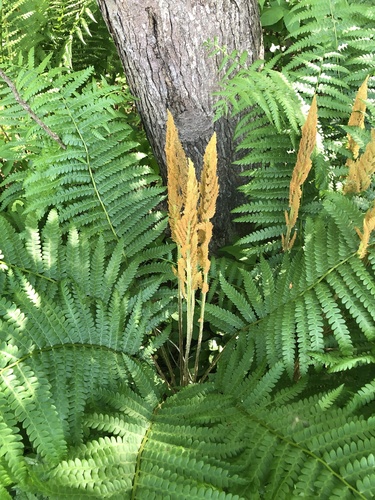
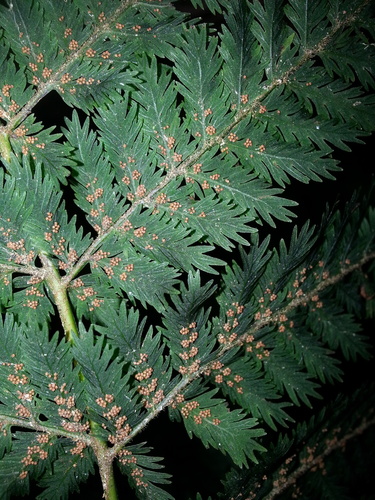
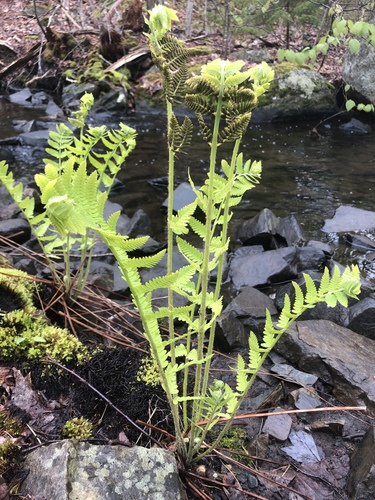
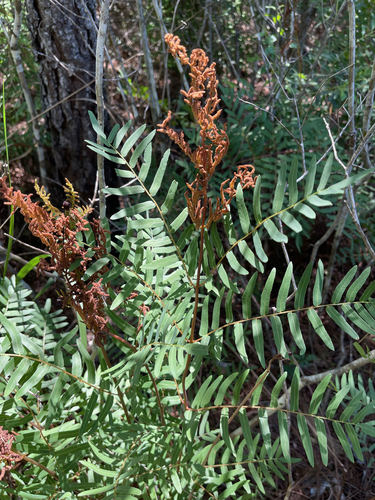
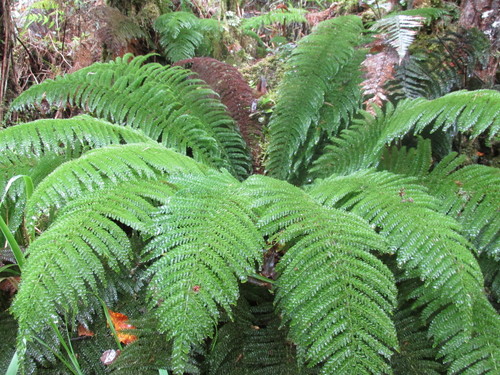
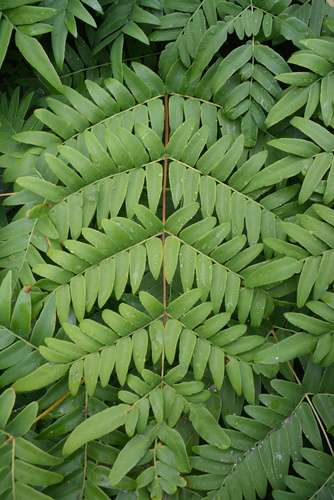
Osmunda japonica Thunb., synonymized as Osmunda nipponica Makino, is commonly known as Asian royal fern or fiddlehead. This species is a fern in the genus Osmunda, native to East Asia. Its native range includes Japan, China, Korea, Taiwan, and the Russian Far East on the island of Sakhalin. It has different common names across regional languages: gobi (고비) in Korean, zenmai (ゼンマイ; 薇) in Japanese, and zǐqí or juécài (紫萁 or 蕨菜) in Chinese. It is a deciduous herbaceous plant that produces distinct separate fertile and sterile fronds. The sterile fronds grow in a spreading pattern, reaching up to 80 to 100 centimeters tall, and are bipinnate. The pinnae of sterile fronds measure 20 to 30 centimeters long, with pinnules 4 to 6 centimeters long and 1.5 to 2 centimeters broad. Fertile fronds are erect and shorter, growing 20 to 50 centimeters tall. This fern grows in moist woodlands, and can only tolerate open sunlight when rooted in very wet soil. Like all ferns, it does not produce flowers. Instead, it forms elaborate sporangia; these structures superficially resemble flowers, which is how the common name fiddlehead originated. Similar to its close relative Osmundastrum cinnamomeum, commonly called cinnamon fern, the fertile fronds of O. japonica turn brown and hold the plant's spores. The sterile vegetative fronds of O. japonica resemble those of another close relative, Osmunda regalis, also called royal fern. In some regions of China, Tibet, and Japan, the young fronds (fiddleheads) of this fern are eaten as a vegetable. In Korea, the young shoots are also commonly used to prepare dishes such as namul. Studies have found that O. japonica improves indoor air quality by significantly reducing airborne toxins, particularly formaldehyde.