About Osmia cornifrons (Radoszkowski, 1887)
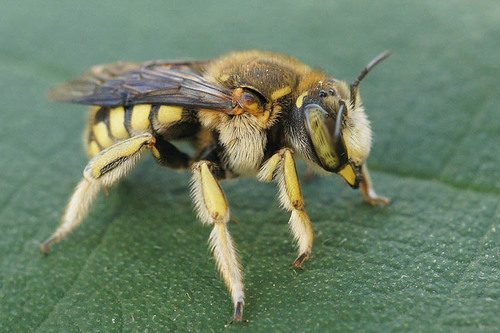
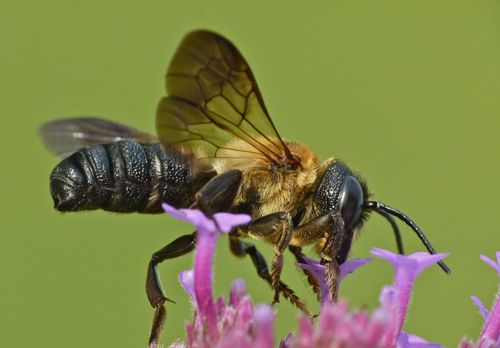
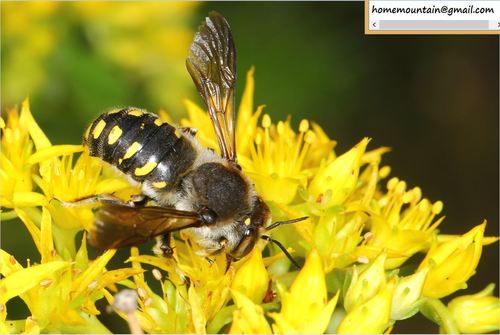
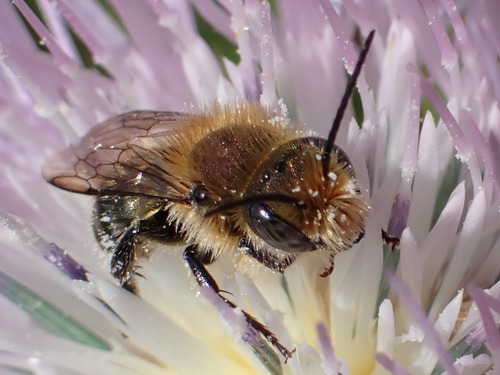
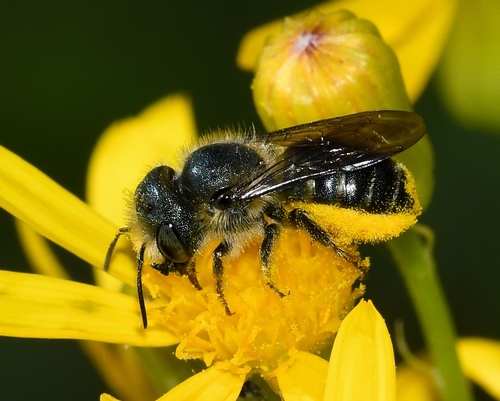
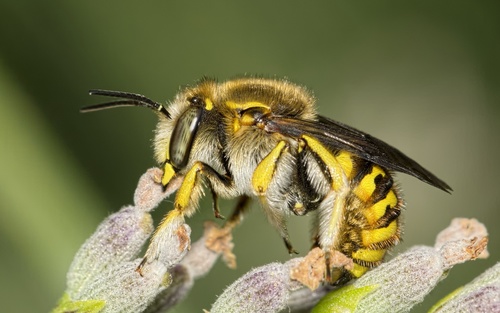
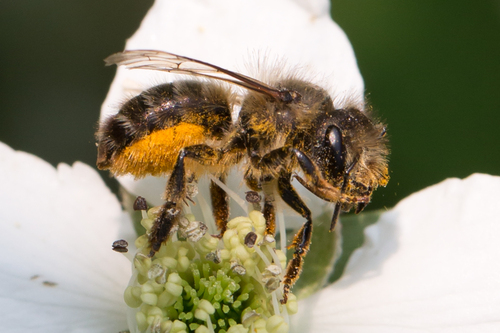
Osmia cornifrons, commonly called the horned-face bee, is a species of solitary bee native to Northern Asia. This species can be physically identified by the horn-like extensions on its lower face. Populations of O. cornifrons have been recorded across Japan, Korea, China, and Russia. Compared to other bee species, O. cornifrons is more docile and less likely to sting when disturbed. The species is used for crop pollination due to its high efficiency at pollinating flowers quickly. A single O. cornifrons can visit up to 2,500 flowers per day, and spends 4 to 8 minutes on each flower it visits. It has high flower constancy, meaning it will consistently return to the same flower species. Both male and female O. cornifrons build nests within 130 meters of crop fields, though some nests have been found as far as 700 meters away. O. cornifrons is a diurnal species, most active between 6AM and 8PM depending on sun position. It avoids foraging during rain, as it is not well adapted to flying in rainy weather. It is best suited to humid environments and performs best in regions with consistent humidity, but it can also function in cooler environments. Its ability to work well across a wide range of environmental temperatures makes it highly valued for crop pollination, and also makes it a more effective pollinator than honeybees.