About Osmia aurulenta (Panzer, 1799)
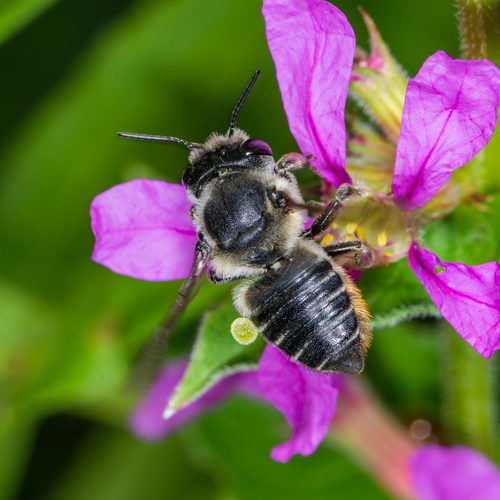
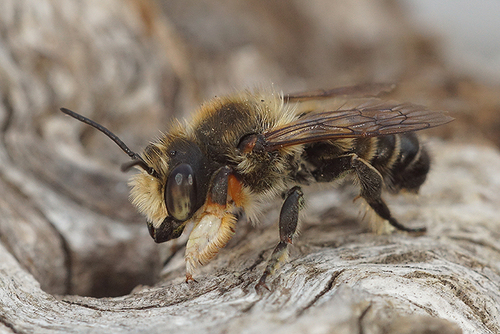
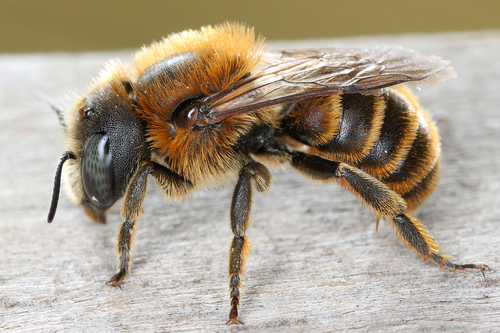
This species, Osmia aurulenta (Panzer, 1799), measures 8–10 mm in body length. In the field, males cannot be distinguished from other similar Osmia species, particularly older individuals. Fresh females can be confused with the slimmer Osmia rufohirta, due to their bright rust-red thorax hairs, narrow rust-red tergite bands, and rust-red belly brush. Older females are similar in appearance to Osmia tridentata. The range of Osmia aurulenta extends from Portugal across Europe and Asia Minor to the Caucasus. To the north, it reaches Ireland, southern Scotland, 59.5° N in Norway, 58° N in Sweden, and extends east to Udmurtia in Russia. To the south, it reaches Sicily, Greece, and Lebanon. This species occurs on calcareous subsoil. Its habitat includes inland dunes, rocky slopes, extensively grazed or fallow sheep pastures (juniper heaths), old fallow vineyards, structurally complex forest edges, and abandoned quarries. In limestone low mountain ranges, it also occupies stony, sparsely overgrown road embankments, and is occasionally found in settled areas there. It occurs from lowland to montane elevations, and reaches subalpine altitudes in southern Switzerland. Osmia aurulenta has one generation per year, with a flight period from March to July; in Switzerland, flight ranges from early March to early September. It is polylectic, with a preference for Fabaceae. Pollen collection from six plant families has been confirmed to date: Asteraceae, Boraginaceae, Cistaceae, Fabaceae, Lamiaceae, and Plantaginaceae. The species nests in empty, medium-sized to large snail shells, and prefers shells of Helix pomatia. In medium-sized shells, only 1–4 cells are arranged in a single line behind one another; in larger snail shells, cells are positioned next to each other in the front portion of the shell. Cell dividing walls and the nest closure are constructed from chewed plant pieces sourced from Fragaria, Helianthemum, and other genera. The outer surface of the snail shell is covered with plant mortar as camouflage. Unlike species such as Osmia bicolor, O. aurulenta does not move the snail shell after finishing nest construction. Known parasites of Osmia aurulenta include the cuckoo bee Stelis punctulatissima, the wasps Sapyga quinquepunctata, Chrysura trimaculata, Chrysura cuprea, Chrysis hirsuta, Chrysura dichroa, and wasps belonging to the genus Pteromalus.