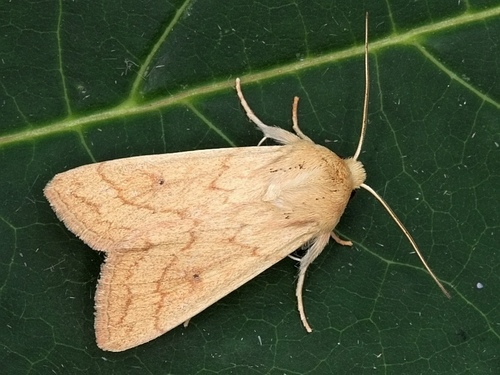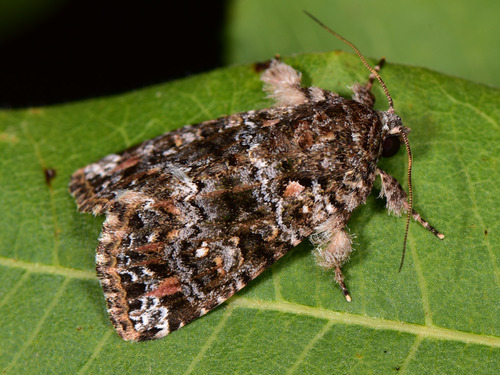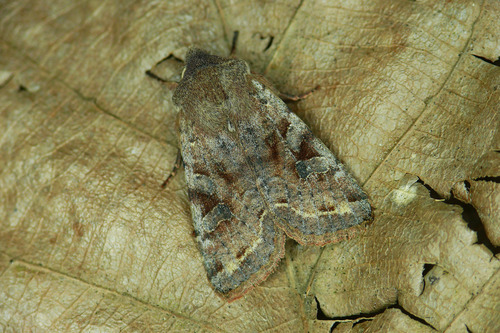
About Orthosia incerta Hufnagel, 1766
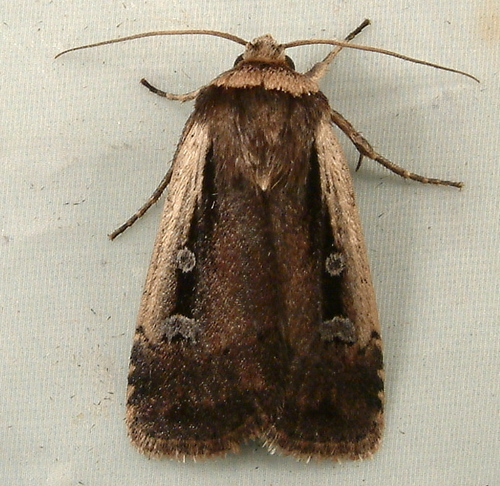
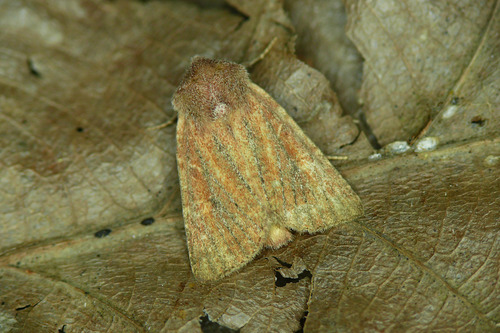
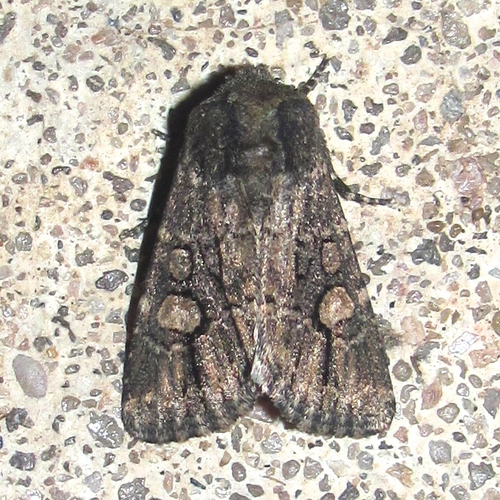
This is the technical description and variation of Orthosia incerta Hufnagel, 1766. The forewing is grey, mixed with fuscous dusting and striation, and often has a more or less distinct rufous tinge. When visible, the inner and outer lines are marked by dark dots on the veins. The submarginal line is variable: it is sometimes obscure, and other times pale, preceded by a dark shade that may be complete or broken into three blotches. The upper stigmata are large; the reniform stigma is generally dark, and both stigmata are edged with pale scaling. There is a strong, thick median shade: it is sometimes bent at the middle and entire, and often only marked at the costa and inner margin. The hindwing is pale or dark grey, with a dark cellspot and a pale fringe. All markings are clearer in unsuffused grey forms. The main unsuffused forms include: pallida Lampa from Sweden, which has a pale grey ground colour, finely striated with dark, and cross lines marked by dark dots; coerulescens Tutt, which has a pale bluish grey ground colour; subsetaceus Haw., which is dark slaty grey with no reddish tinge; and subcarnea nov. [Warren], which is greyish flesh colour, has deep brown praesubmarginal shades, and a dull white hindwing with dark submarginal band and dark cellspot. Among darker forms: contracta Esp. is suffused with rufous brown, grading to fuscatus Haw., which is dark purplish liver colour; angustus Haw. is a rarer form mottled with chestnut brown and fuscous; atra Tutt and rufa Tutt are two equally rare forms, with atra being unicolorous sooty blackish, and rufa being bright reddish. These dark suffused forms are more common in Britain, where paler, more typical forms are rare. One additional, apparently undescribed form is olivacea nov. [Warren]. This form has an ashy grey forewing with a strong olive flush; the median shade and the clouds before the submarginal line are also deeper olive. Of the two known male specimens, one is much more varied with olive fuscous and has better marked lines than the other. The female is wholly dark olive fuscous, with pale edges on the stigmata and pale submarginal line. In all three known specimens of olivacea, the reniform stigma is broader and less oblique than in typical O. incerta. The hindwing varies from pale to dark grey with an olive tinge, and has a dark cellspot and whitish fringe. The three type specimens (2 males, 1 female) plus additional more or less typical specimens were collected from Cedre, Hautes Pyrenees. Orthosia incerta is difficult to certainly distinguish from its congener Orthosia populeti (Fabricius, 1781). See Townsend et al.