About Orthopristis chrysoptera (Linnaeus, 1766)
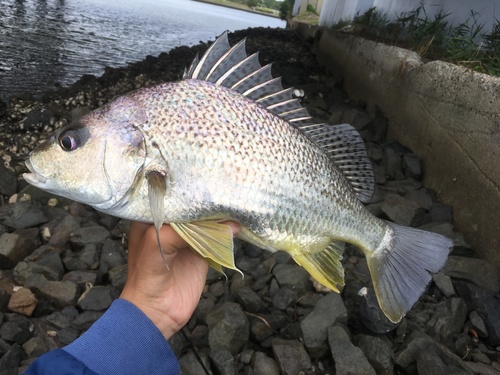
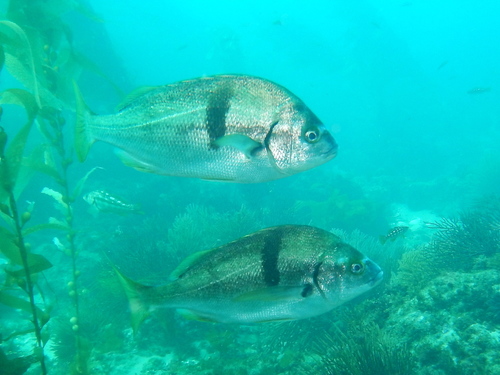
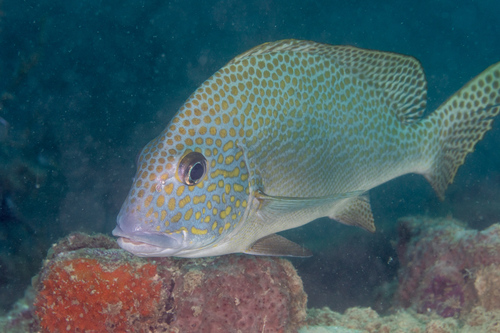
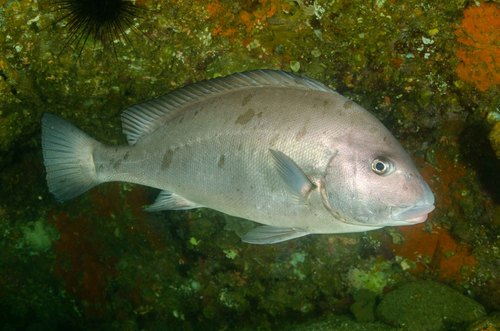
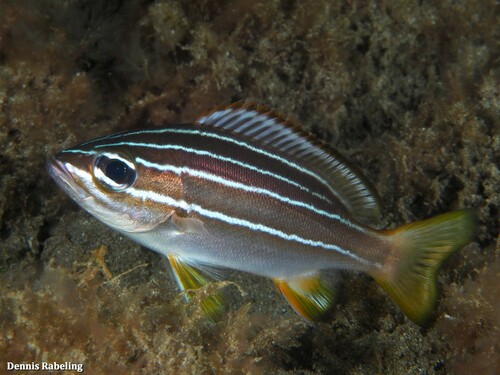
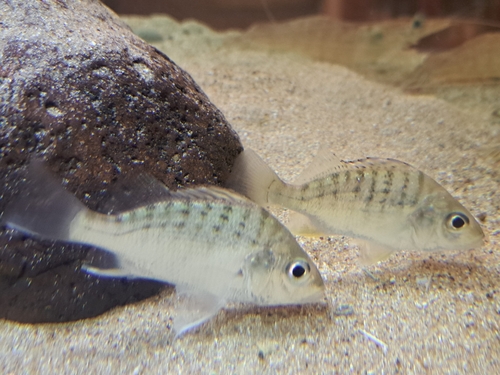
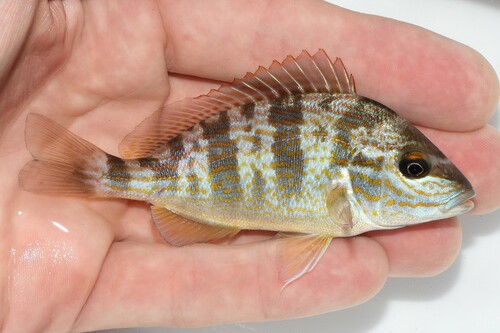
Orthopristis chrysoptera reaches a maximum total length of 46 centimeters (18 inches), with 30 centimeters (12 inches) being a more typical size. The maximum recorded weight for this species is 900 grams (32 ounces). It has an elliptical, oval-shaped, compressed body, with a small, thin-lipped mouth that does not extend to the eye and is not red inside its mouth. The jaws bear a narrow band of thin teeth. Its dorsal fin has 12 to 13 spines and a similar number of soft rays, while its anal fin has 3 spines and 12 to 13 soft rays, with the second spine being slightly thicker and longer than the third. The entire body is covered in scales, except for the tip of the snout, lips, and chin. Commonly called the Pigfish, this species is pale bluish-grey on its back and silvery on its underside. Every body scale has a blue center and a bronze spot at the margin, which forms diagonal orange-brown stripes running up and along the flanks and back; the stripes below the lateral line are horizontal. The head has bronze spots, and the fins are yellowish-bronze with dusky margins. Orthopristis chrysoptera is distributed in the western Atlantic Ocean along the east coast of the United States and Mexico. Its range stretches from Massachusetts to Florida, extends into the Gulf of Mexico, and also includes the Yucatan Peninsula, Cuba, and Bermuda. A single specimen was reported off the coast of southern Sicily in 2020, and it was likely transported there accidentally by a ship. This species occurs at depths between 1 and 20 meters (0 and 70 feet), and can be found in estuaries and bays, occasionally entering canals, but it rarely enters waters with very low salinity. Within these shallow waters, it lives across a range of habitats: over soft substrates like sand or silt, hard substrates including jetties, reefs, and oil rigs, as well as on shell banks. It can be found in both coastal waters and over the continental shelf.