About Orthoporus ornatus (Girard, 1853)
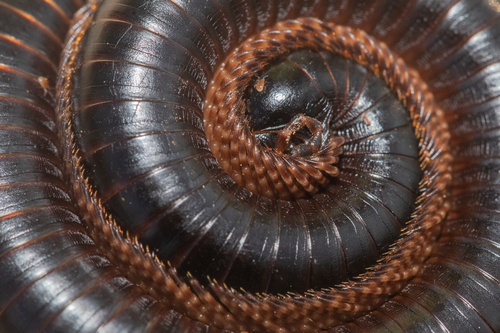
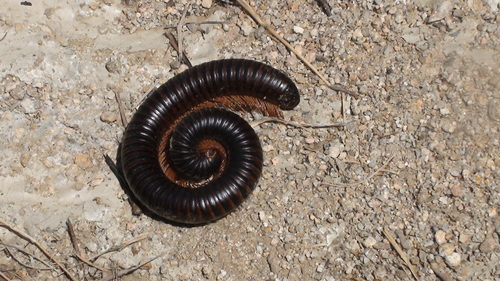
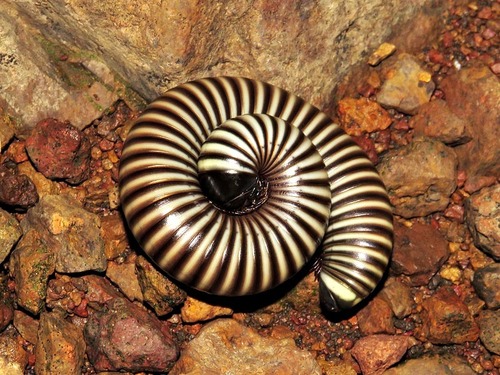
Orthoporus ornatus, commonly called the desert millipede, is generally large, long, and has many legs and body segments. Its head, which forms the first body segment, bears a paired sensory structure called the Organ of Tömösváry, located at the base of each antenna. Every body segment after the head has two pairs of legs. Desert millipedes molt each time they add a new body segment. The desert millipede is native to the Sonoran Desert in western North America. It has specifically been recorded within the eastern city limits of Phoenix, Arizona, and at Phoenix’s Papago Park. It generally inhabits desert ecosystems with abundant rocks, shrubs, damp soil, and tree trunks. It has also been found in Albuquerque, New Mexico, in one study, and has been recorded in Texas as well. Orthoporus ornatus lives in deep, damp soil of desert ecosystems, occupying small channels and voids within the soil. The soil provides abundant food sources and protects the millipede from above-ground biotic and abiotic factors including predation, harsh weather, and ultraviolet radiation. The main food sources for the desert millipede are bacteria, dead plant material, and tissues from dead shrubs including cholla, creosote bush, and ocotillo. It also feeds on surface litter and bark of Mormon tea and mesquite, as well as tiny pieces of sand, rock, and other invertebrate animals. The millipede cannot feed without moist soil. Above-ground feeding is not seen year-round, as the millipede only comes to the surface once each year. When it emerges, it feeds voraciously to store enough energy for the period when it returns to living below ground. This feeding behavior is thought to contribute to nutrient cycling in desert ecosystems. The desert millipede has defenses against predation, though its underground habitat provides the greatest protection from predators. Around thirteen species have been observed feeding on these millipedes.