About Orthodera novaezealandiae Colenso, 1882
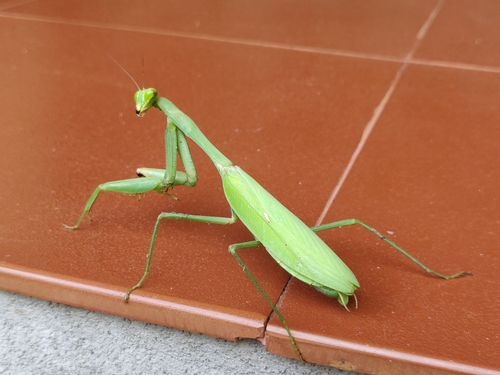
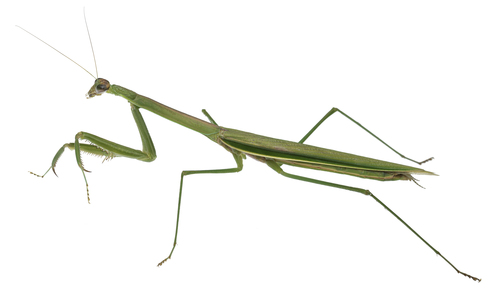
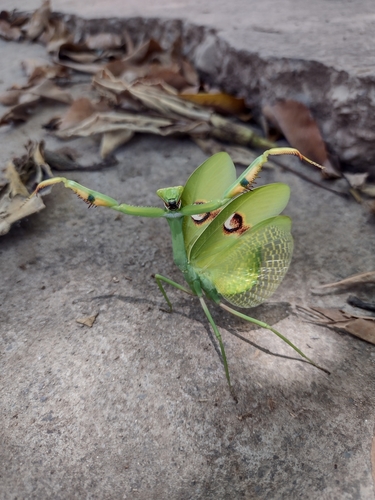
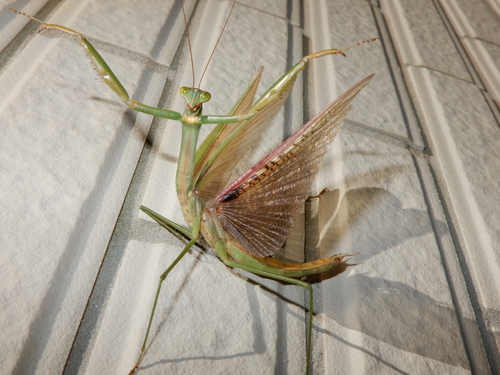
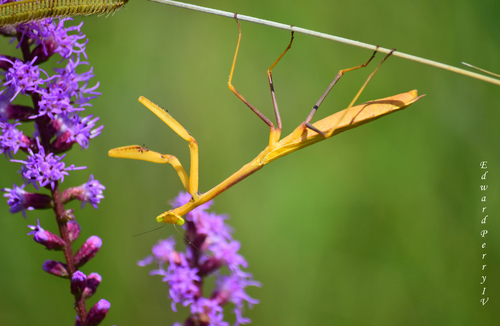
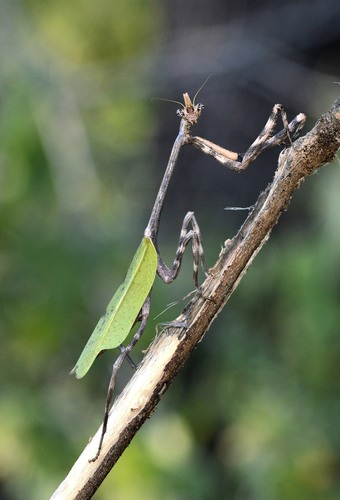
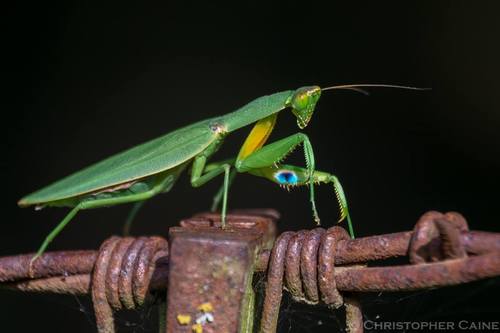
Orthodera novaezealandiae, commonly known as the New Zealand mantis, has distinct physical traits across its life stages. Nymphs are pale, translucent green with a dark stripe running from the head to the end of the abdomen. Adult individuals are bright green, and reach a total length between 35 mm and 40 mm. Like most mantis species, this species exhibits sexual dimorphism, with females growing larger than males. It has a triangular head with slightly oversized compound eyes that provide excellent binocular vision, though it does have a blind spot. Its wings differ from those of other mantis species in the development of the archedictyon and the absence of cross-veins in the forewing. Described as a very active small mantis, O. novaezealandiae is well-adapted to a predatory lifestyle. Its specialized predatory forelimbs are long and lined with extremely sharp spikes to trap prey. This species can be distinguished from Miomantis caffra, an introduced South African mantis that became established in New Zealand in the 1970s, by blue eyespots on the underside of its forelegs. The egg case (ootheca) of O. novaezealandiae holds eggs arranged in two distinct rows, which contrasts with the less organized, messier egg mass of M. caffra. Oothecae are typically positioned facing north toward the sun, on the warm exposed faces of branches and tree trunks.
In terms of ecology, O. novaezealandiae prefers open, shrubby terrain with leafy vegetation, which it uses as camouflage to ambush prey. It can reach high population densities in the branches of small manuka and kanuka trees growing in open meadow-like habitats, where grass-dwelling prey such as small moths are abundant. It hides effectively from predators and sits near or at the top of the invertebrate food chain in its native habitat. As an endemic New Zealand species that consumes pest insects and has a large appetite, it is considered a beneficial insect for agriculture, and is often used in home gardens. O. novaezealandiae is vulnerable to pesticide use, both through direct poisoning and through reductions to its food supply. Its oothecae are also sometimes attacked by parasitic wasps. Native males of O. novaezealandiae are often attracted to introduced female M. caffra, and this interaction frequently results in the death of the native male due to the sexually cannibalistic behavior of M. caffra females. Unlike the introduced species, female O. novaezealandiae rarely engage in cannibalism. Only two mantis species are found in New Zealand: this endemic native species and the introduced M. caffra, which was first confirmed established in the Auckland suburb of New Lynn in 1978. O. novaezealandiae is taxonomically very closely related to the Australian species Orthodera ministralis, and has sometimes been considered conspecific and taxonomically synonymous with it.
O. novaezealandiae is bred in captivity. Special care is required to prevent this small, fast-moving species from escaping; nymphs are especially quick and can leap surprisingly far. Captive individuals can be kept at room temperature between 20–25 °C (68–77 °F), though the species prefers warmer conditions. Their enclosure should be sprayed with water a few times per week. Young individuals require an enclosure humidity of approximately 50%–60%. Captive O. novaezealandiae can be fed a diet of small crickets and flies, while nymphs can be easily reared on fruit flies such as Drosophila melanogaster.