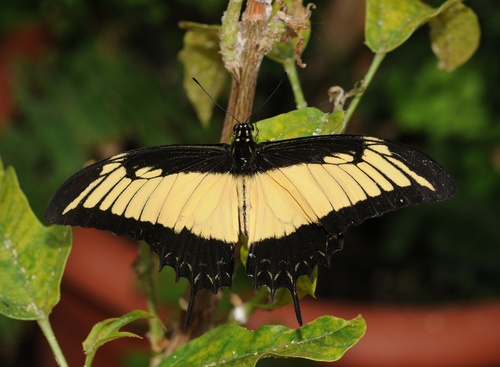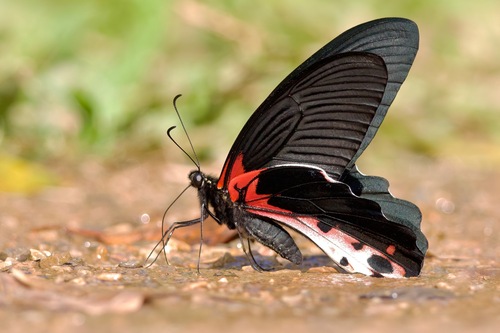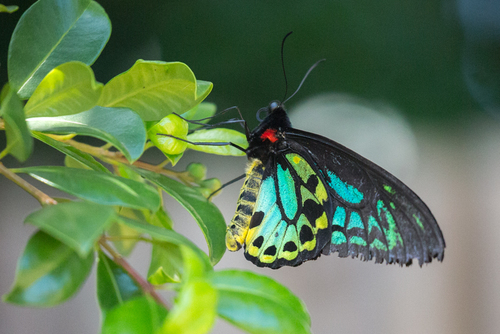
About Ornithoptera richmondia (Gray, 1853)
Ornithoptera richmondia, commonly known as the Richmond birdwing, is a species of birdwing butterfly endemic to Australia. Among all birdwing species, it is the second smallest; the smallest species is Ornithoptera meridionalis.
Historically, O. richmondia has been recorded in rainforests stretching south from Maryborough to the Clarence River in New South Wales. Widespread habitat loss across its original range has made its current distribution much more restricted, particularly in Queensland. Its present-day range includes Kin Kin, Pomona, North Arm, Yandina, Coolum (though the Coolum population is now extinct due to drought), Parklands, Nambour, Diddillibah, Buderim, Eudlo, Palmwoods, the Mooloolah and Diamond Valleys, the entire Blackall Range from southeast of Kenilworth to the state forest near the Caloundra Turnoff and west to Peachester and the Stanley River, and the Conondale Range southwards to Mount Mee. South of Brisbane, the species has been recorded along the Nerang River and in the Tallebudgera valleys, and has an important stronghold in the national parks adjacent to the Queensland-New South Wales border. In New South Wales, the species is widespread in rainforest extending south to the Blackwall Range near Wardell and Cherry Tree State Forest near Mallangangee, according to records from Braby 2000, Sands & New 2002, and Sands & Scott 1997.
Even though O. richmondia can be abundant at higher altitudes, such as in the Queensland-New South Wales border ranges national parks, populations in these areas typically die out during cold winter winters. Populations here can only persist through migration of adults from lowland areas, so population sizes in these high-altitude habitats vary from year to year. A recommended location to view this species is the car park at the base of the summit trail to Mount Warning in Mount Warning National Park, New South Wales. In good weather during the species' flight period, sighting a Richmond birdwing here is almost certain.