About Oriolus traillii (Vigors, 1832)
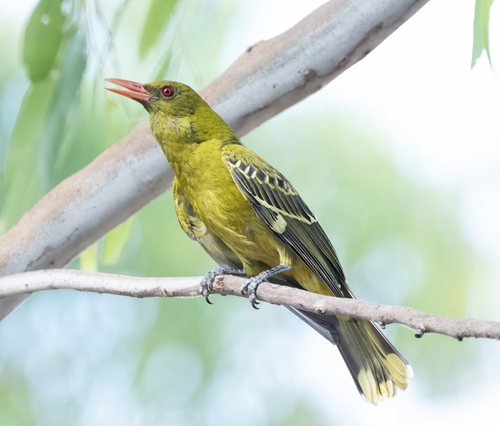
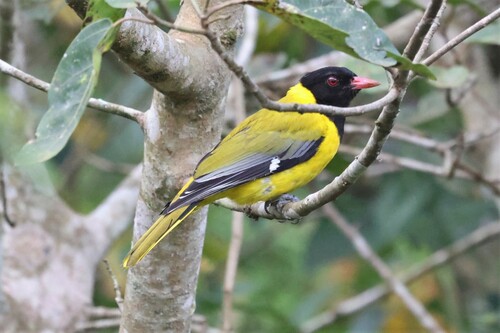
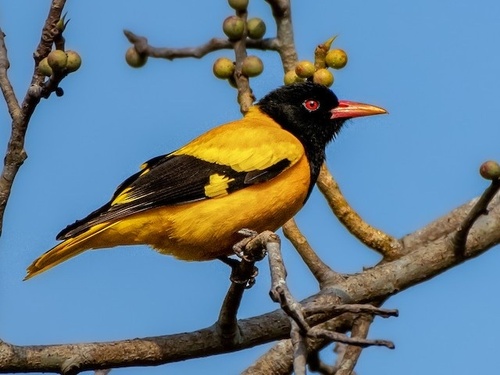
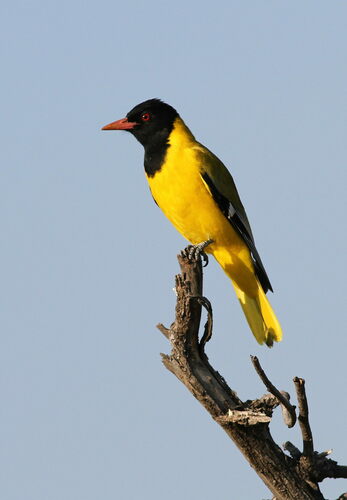
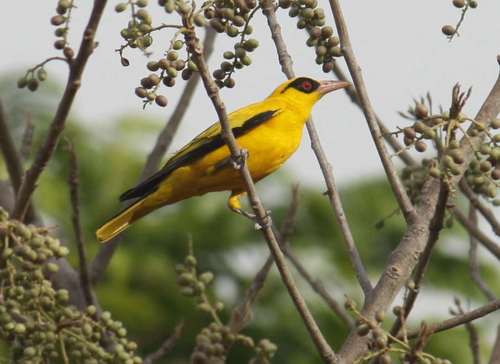
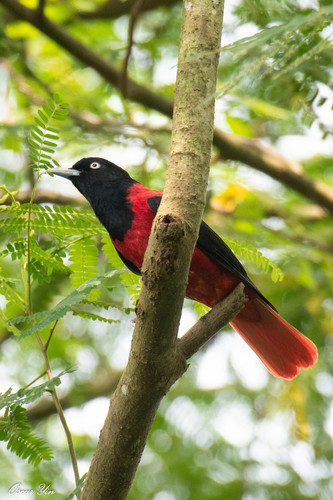
The maroon oriole (scientific name: Oriolus traillii (Vigors, 1832)) has maroon and black plumage, a black head, black neck, black wings, and a blueish beak. Females have slightly darker bodies, while juveniles have lighter bodies. Adult males are glossy crimson-maroon, with black heads, necks, and wings, and a chestnut-maroon tail. Females and immature males have greyish-white underparts marked with black streaks. Its coloration varies slightly across its range: individuals in the Indian Subcontinent have duller colors, and those in Southeast Asia have brighter colors that tend towards slightly reddish tones. The maroon oriole is distributed across Bangladesh, Bhutan, Cambodia, India, Laos, Myanmar, Nepal, Taiwan, Thailand, Tibet, and Vietnam. Within India, it occurs from Himachal Pradesh east to Arunachal Pradesh, and in the hills of Manipur. Its natural habitat is subtropical or tropical moist lowland forests. The maroon oriole lives alone or in pairs. Its nesting season runs from April to May. It builds a deep, massive cup-shaped nest from bast fibre, bound together with cobwebs. Both male and female maroon orioles share parental duties.