About Origma solitaria (Lewin, 1808)
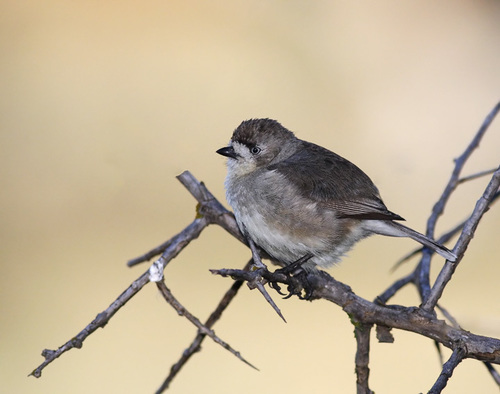
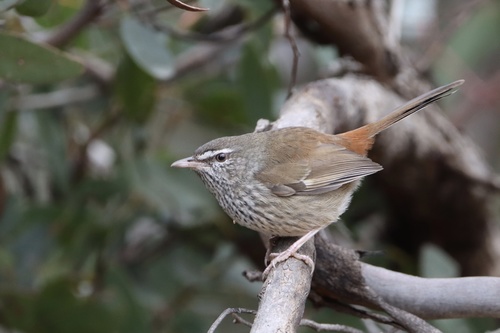
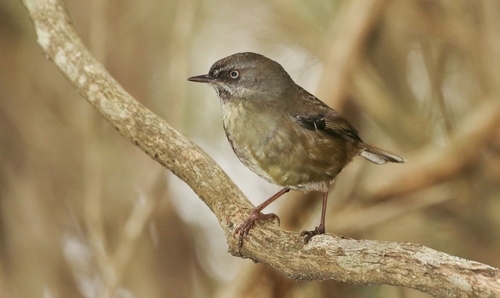
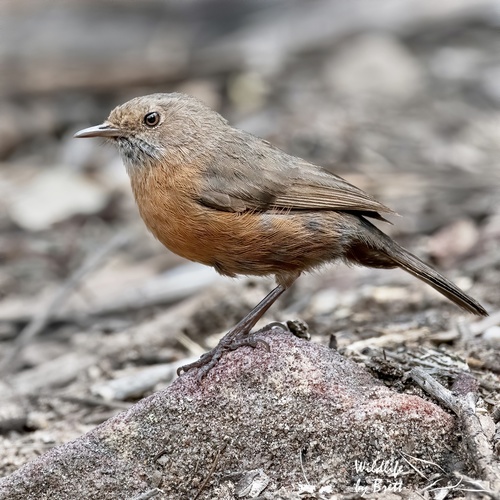
The rockwarbler, scientific name Origma solitaria (Lewin, 1808), measures 14 cm (5.5 in) in length and weighs approximately 14 g (0.5 oz). It has predominantly dark grey-brown plumage, with darker wings, more red-brown underparts, a cinnamon-tinged face and forehead, a whitish throat, and a black tail. Adult males and females have identical-looking plumage. Juveniles have duller, paler plumage than adults, plus a reddish tint to the throat and a greyer chin. It can be told apart from the pilotbird by its smaller body and head size, white throat patch, and square tail. Its main call is a repeated shrill chis-sick, produced during the breeding season, though birds may also make a tid-ed-dee call. The contact call is rasping and smooth, and the alarm call is a single note that resembles the contact call. The scold call is a chatter similar to that of scrubwrens. Rockwarblers are skilled mimics, and can replicate the calls of many other bird species, including scrubwrens, white-eared honeyeaters, grey butcherbirds, eastern spinebills, rufous whistlers, and more. In the wild, this bird is most often seen hopping erratically across rocks while flicking its tail. It prefers habitats of woodland and gullies that have exposed sandstone or limestone rocks, and it is often found near water. Its range is limited to central eastern New South Wales, within a 240 km (150 mi) radius of Sydney. Human-modified habitats have had a negative effect on this species, and its populations have declined in affected areas. Most of the species' current range is protected within national parks, which protects it from further habitat loss. Rockwarblers generally do not migrate, except during periods of extreme drought. In terms of social behavior, rockwarblers may live alone, in pairs, or in family groups of up to five members. They do not fly long distances, though they are quite fast when they do fly, and flights are typically low to the ground. When they are not flying, they flick their tail from side to side.