About Orientus ishidae (Matsumura, 1902)
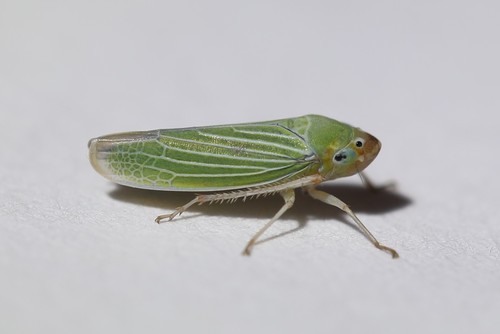
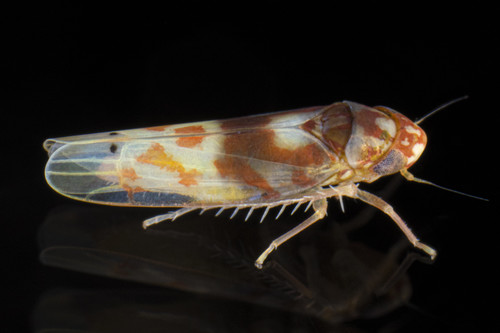
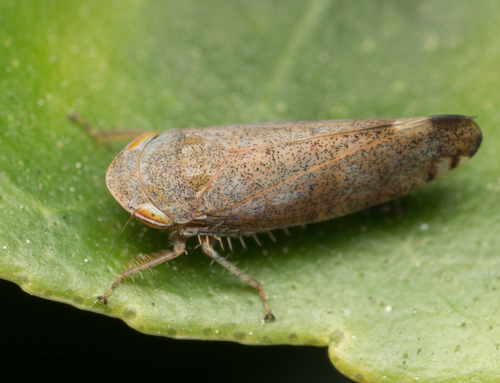
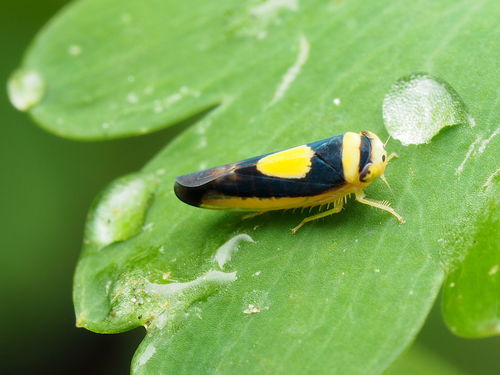
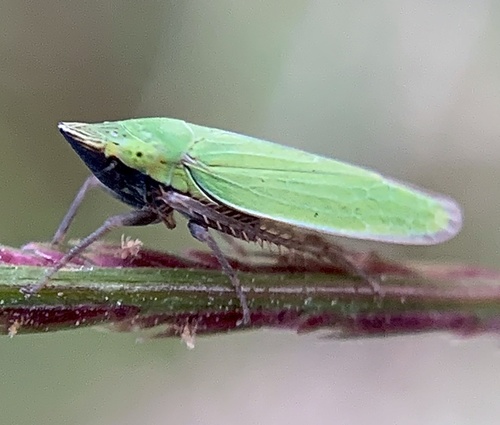
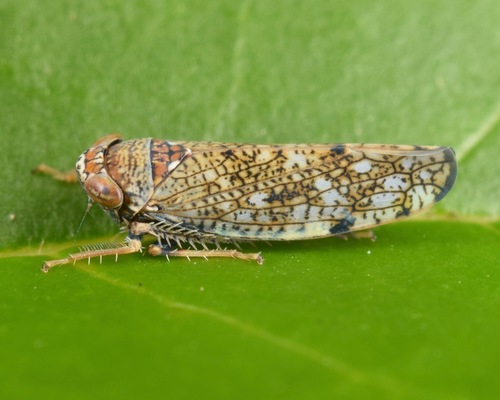
Adults of this leafhopper species Orientus ishidae reach a length of 4.5–6.5 millimetres (0.18–0.26 inches). This species has a distinctive mosaic-like pattern on its forewings, and an orange band between the eyes. Orientus ishidae associates with willow (Salix species), hornbeam (Carpinus betulus), and many other woody plants and deciduous trees. It can cause serious leaf damage to several tree species, and it is identified as a vector of the phytoplasmic flavescence dorée (FD) disease that affects vineyards. Adult individuals can be found between June and October. Nymphs have strong, distinct colouration, with variable patterning. When responding to danger, they often hold a tail-up posture, as seen in the image on the left. This species is endemic to the East Palearctic realm, and is also present in the Nearctic realm and the Oriental realm. It has been introduced to the United Kingdom (first reported in Peckham in 2011), Germany, Italy, Switzerland, and several other European countries.