About Oregonia gracilis Dana, 1851
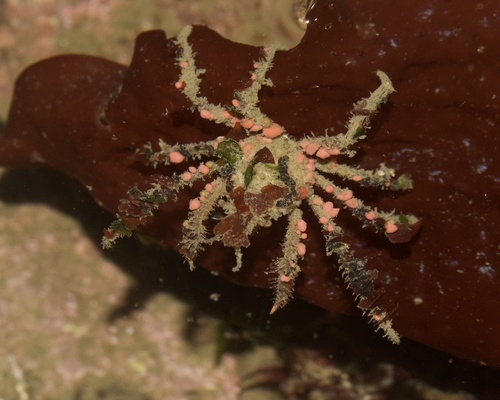
Oregonia gracilis, commonly known as the graceful decorator crab, is a species of crab in the family Oregoniidae. Like other decorator crabs, it regularly attaches other sessile organisms to its back. These organisms attach to hooked setae, which work like velcro to hold them in place. This decorative covering provides both visual and chemical camouflage, which lowers the crab's risk of being preyed on. Pacific halibut are a major predator of O. gracilis, and other known predators include octopus and sea otters. The main food source of O. gracilis is floating kelp and algae, which the crabs capture using a waiting strategy to maintain their camouflage (cryptosis).
Oregonia gracilis inhabits areas from the intertidal zone down to 436 meters deep. It can be found in the Bering Sea, along the North Pacific Coast, and near Japan.
For most of their lives, O. gracilis are solitary, only coming together during mating season. They locate mates using chemical cues. During mating, the male uses its first and second abdominal appendages to transfer sperm packets called spermatophores to the female. The sperm fertilizes eggs that the female produces and carries on her setae. Recently laid eggs are orange-red, while eggs that are almost ready to hatch are reddish-brown. O. gracilis hatch at an advanced larval stage called zoea. Zoea larvae already have developed compound eyes and a spiny carapace, and drift toward the water surface. After the zoea phase, larvae progress to the megalopa phase before finally developing into their adult form.