About Opuntia tunoidea Gibbes
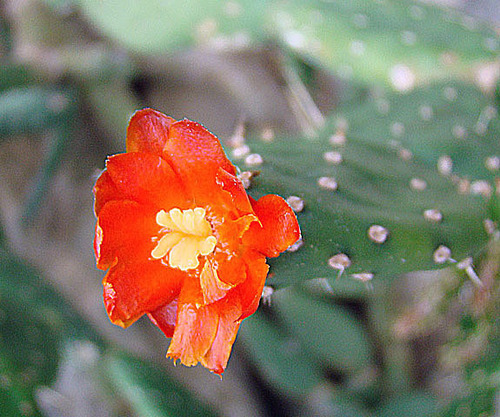
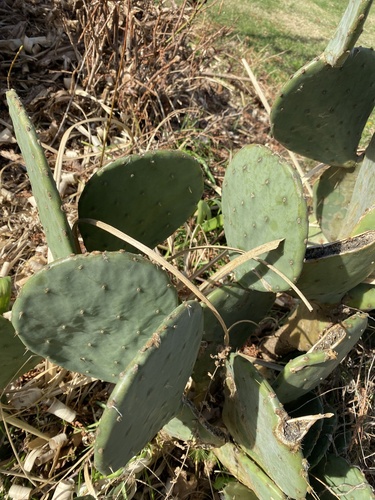
Opuntia tunoidea Gibbes grows in colonies that reach up to 4 feet tall, and produces flattened, succulent pads covered in many rigid spines, alongside sharp, barbed glochids. The presence of these spines and glochids distinguishes O. tunoidea from the spineless Opuntia humifusa, which occupies a similar habitat. O. tunoidea produces yellow flowers, which match the typical flower form of other species in the Opuntia genus. After pollination, flowers develop into purplish edible fruits that are also covered in glochids. Most populations of O. tunoidea are concentrated in coastal areas of the United States, where the species grows on sand dunes. Scattered populations also grow in the Piedmont region and parts of the southern Appalachian Mountains, where these populations are the result of escape from cultivation. A small introduced population of O. tunoidea exists in Croatia. In its native coastal range, O. tunoidea commonly grows along the seaside in coastal sand dunes, and it shows clear resistance to high salt levels and sea spray. Cochineal, a type of scale insect, is often found feeding on the sap of O. tunoidea, which causes some damage to the plant. The species' seeds are primarily dispersed when birds consume its fruits. O. tunoidea has escaped cultivation in many locations outside its native coastal range, and can be found growing on sunny roadsides with thin soil. There is very little additional published information about O. tunoidea, so it remains an obscure plant. As of current records, there are 993 reported sightings of O. tunoidea logged on iNaturalist.