About Opuntia rufida Engelm.
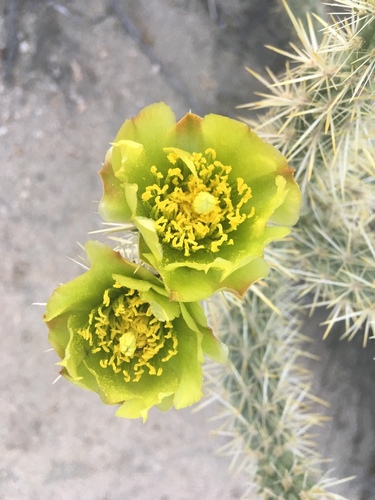
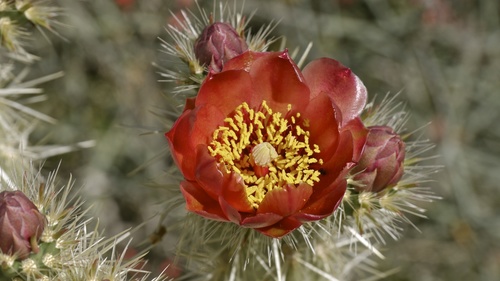
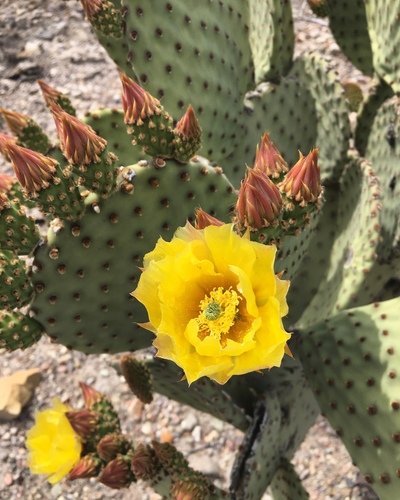
Opuntia rufida Engelm. is a multi-branched cactus that grows 0.9 to 1.5 m (3 to 5 feet) tall, and typically grows slightly wider than it is tall. It usually forms a short trunk, and its moderately thick, tomentose pads are shaped as subcircular, obovate, or elliptical. This species has spineless areoles, but bears prominent red-brown glochids. In mid-spring, it produces an abundant display of bright yellow flowers that shift to orange and red as they age, each measuring 8 to 10 cm (3 to 4 inches) across. In summer, it produces oblong fruit that is bright red to purple and 5 to 8 cm (2 to 3 inches) long. This cactus can make a striking ornamental feature for desert-style gardens. It requires full sun exposure and tolerates extreme desert heat very well. However, its glochids easily detach from the plant when it is bumped or shaken, and they can be hazardous to humans and animals if carried by wind. Its common names, blind prickly pear and cow blinder, reference that airborne glochids can blind animals. The specific epithet rufida refers to the plant’s reddish-brown, ruddy glochids. Opuntia rufida is native to the Big Bend region of southwestern Texas and the northern Mexico portion of the Chihuahuan Desert. It has been planted as an ornamental in Queensland, Australia, and is now classified as a Prohibited invasive plant under the Biosecurity Act 2015. Under this classification, it cannot be sold or moved within Queensland, and any occurrence must be reported to Biosecurity Queensland.