About Opomyza florum (Fabricius, 1794)
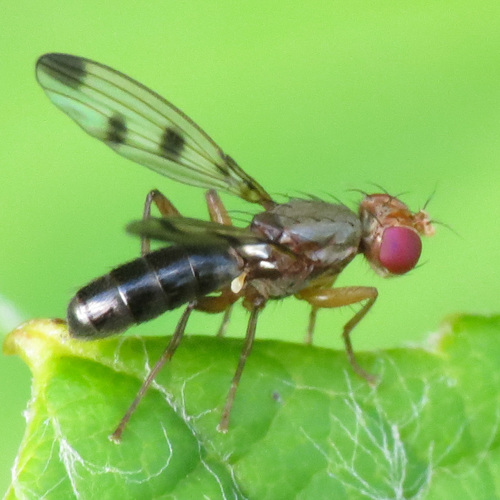
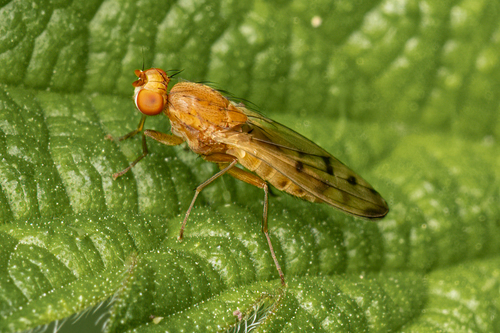
Opomyza florum, first described by Fabricius in 1794, is a small fly species that reaches an adult body length of 3.5 to 5 millimeters. Adult individuals have a rusty-yellow base color, with several dark setae present on the mesonotum and scutellum. Their eyes are reddish, and their wings are yellowish, transparent, and marked with scattered smoky-brown spots. The larvae of this species are oligophagous stem borers that feed inside plant stems. Their main host food plants include wild cereals, legumes, and commercial cereal crops. Larvae can be found in early spring, while adult flies are active from the end of May through June, and remain active until October. This species is classified as an agricultural pest that causes damage to winter cereals including wheat, barley, and rye. Opomyza florum occurs across all of Europe. It typically inhabits meadows and commercial cereal crop fields.