About Oplegnathus fasciatus (Temminck & Schlegel, 1844)
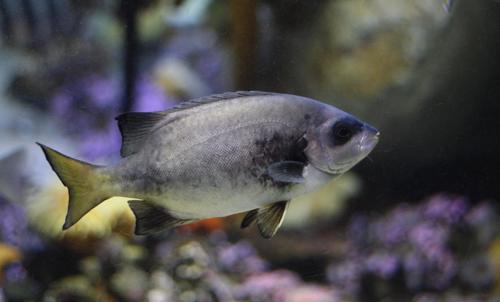
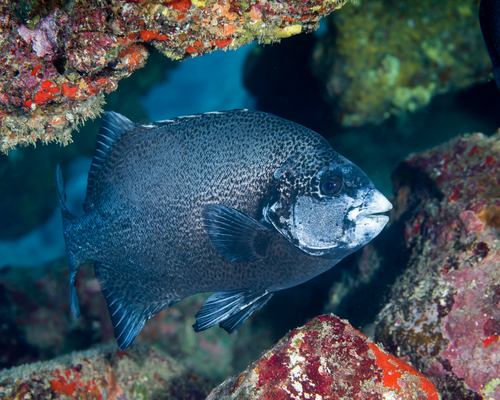
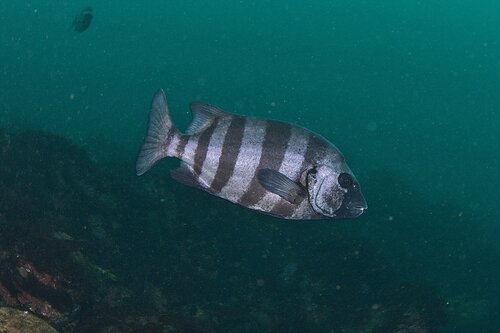
The barred knifejaw (Oplegnathus fasciatus), also called the striped beakfish or rock bream, is a species of marine ray-finned fish belonging to the family Oplegnathidae. It is native to the north-western Pacific Ocean, though scattered records exist from other eastern Pacific localities such as Hawaii and Chile. It was recently introduced to the central Mediterranean, most likely via ship ballast water, and occurs very rarely between Malta and the northern Adriatic. This species has no formally listed conservation status, but it is farmed for consumption and targeted by anglers in many Asian countries, which indicates it is common. The barred knifejaw lives on rocky reefs at depths ranging from 1 to 10 m (3 to 33 ft). Juvenile barred knifejaws are found among patches of drifting seaweed. This species can reach a total length of 80 cm (31 in), and the maximum recorded weight for the species is 6.4 kg (14 lb). Like all members of the Oplegnathidae family, the barred knifejaw has a beak-like structure formed by the fusion of its teeth. One of the clearest identifying features of O. fasciatus is the 7 vertical black bars that run along both sides of its body, which gives the species its common name. The first bar characteristically starts above the fish's eye, and the last bar sits on the body as it narrows toward the caudal peduncle. The tip of the caudal fin is also typically black. Overall, the species is easy to identify by its black stripes and otherwise solid white or grey body, though large adult males have been recorded with black snouts and no striping. The dorsal and anal fins are positioned toward the rear of the body, while the pectoral and pelvic fins sit ahead of the body's midline. Adults use their beak-like mouth structure to feed on hard-shelled invertebrates such as crustaceans and mollusks, while juveniles rely heavily on zooplankton. It is a commercially important species farmed across many East Asian countries for aquaculture purposes including fishing, fish ranching, genetic analysis, and selective breeding to produce larger fish that serve as a better food source. The barred knifejaw is endemic to the western Pacific Ocean, found notably around the Hawaiian Islands, Japan, and the Osawara Islands. Most barred knifejaws live along coastal reefs, while juveniles are frequently found in areas with seaweed, where their primary food source (zooplankton) is abundant and the seaweed provides cover. The fish typically inhabit reefs, debris, and other shelter-providing structures with accessible food sources such as mollusks and crustaceans up to 10 meters deep. Following the 2011 tsunami in Japan, a large amount of debris was washed out into the Pacific Ocean. Two Japanese fishing vessels from this debris washed ashore in Long Beach, Washington, and carried at least five specimens of O. fasciatus. One of these five fish is still kept as a museum exhibit at the Seaside Aquarium in Seaside, Oregon. Since that event, rare sightings of barred knifejaw have been reported in Monterey County, California, and Curry County, Oregon in 2015.