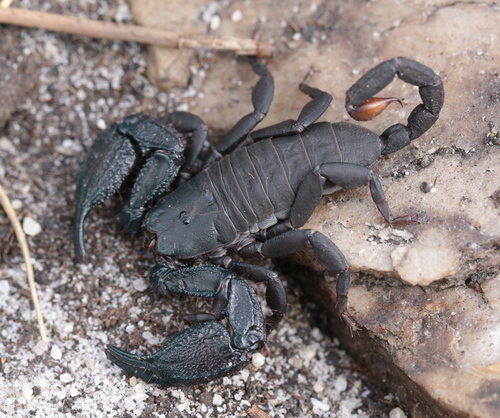
About Opisthacanthus capensis Thorell, 1876
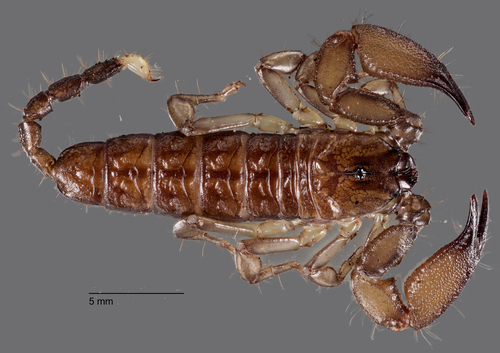
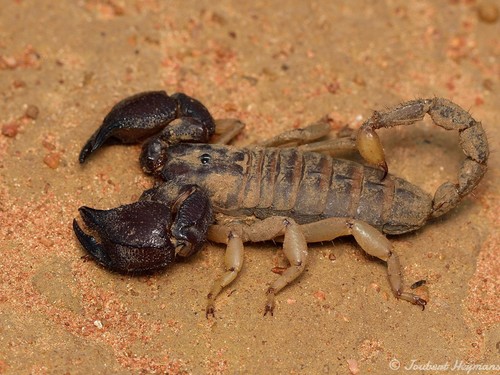
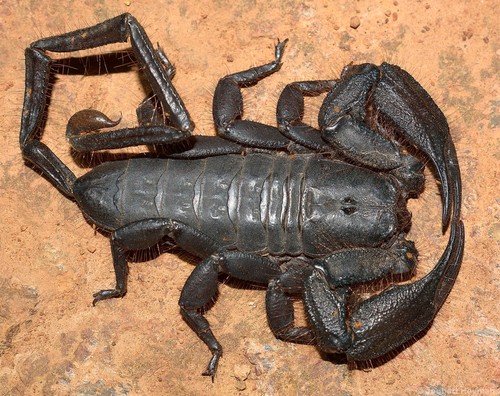
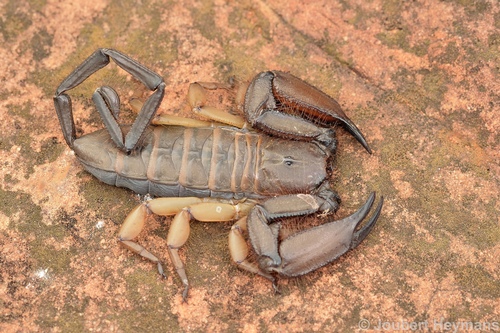
Opisthacanthus capensis is a scorpion species found in Cape Province and Zimbabwe. Individuals have robust chelae, and their base body color ranges from dark brown to black; some individuals turn green after staying under cover for an extended period. Scorpions of the Opisthacanthus genus are both arboreal and ground-dwelling, and this species is found mainly in moist habitats within dense vegetation, pine plantations, and forests, where it hides under bark and rocks. The venom of Opisthacanthus capensis contains powerful neurotoxins, cytotoxins, mucopolysaccharides, hyaluronidases, phospholipases, serotonins, histamines, enzyme inhibitors, and proteins including neurotoxic peptides. The venom of this species is largely composed of melittin, which stimulates release of the enzyme phospholipase A2, a process that causes inflammation and pain. Phospholipase A2 cleaves the SN-2 acyl chain to release arachidonic acid. Despite the composition of its venom, O. capensis is only mildly venomous to humans, and its sting only produces local pain. This species is prey that appears in the diets of four mammal species: the bat-eared fox Otocyon megalotis of the family Canidae, the yellow mongoose Cynictis penicillata, the small grey mongoose Galerella pulverulenta, and the water mongoose Atilax paludinosus of the family Viverridae.