About Opilio saxatilis Koch, 1839
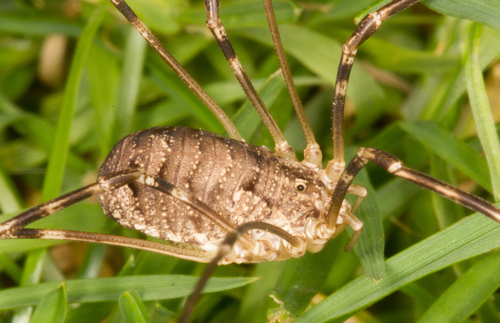
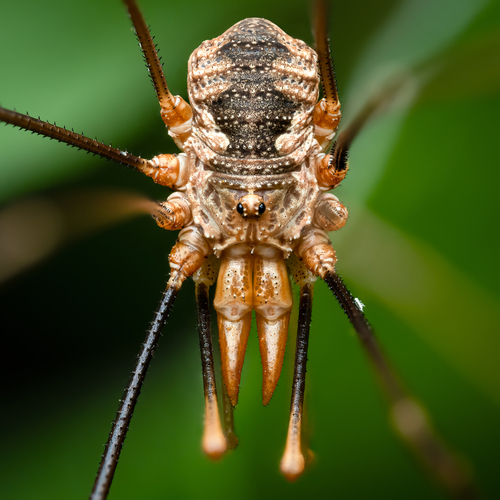
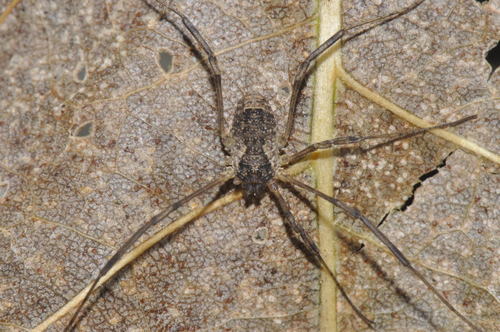
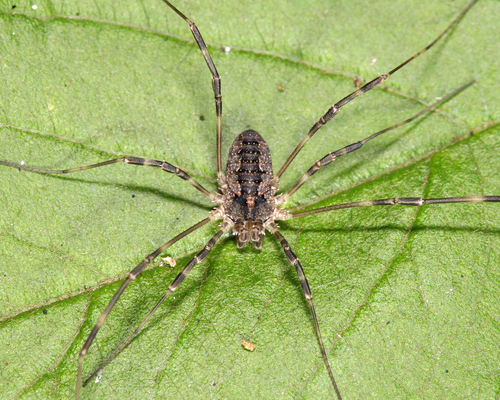
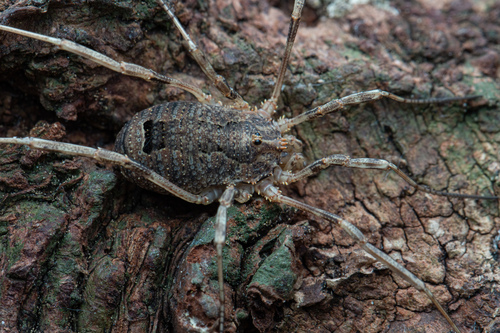
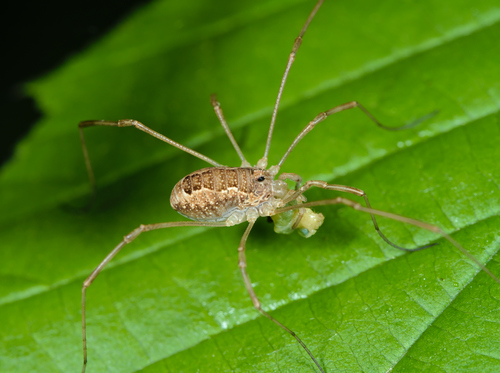
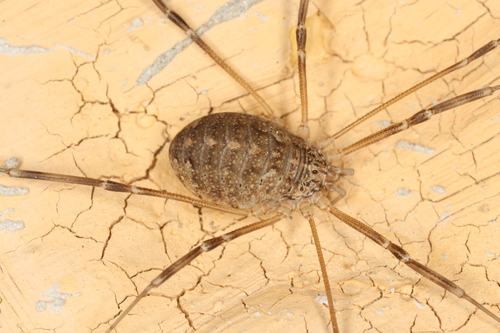
Opilio saxatilis Koch, 1839 is morphologically similar enough to Opilio parietinus that it was previously treated as a synonym of that species, but there are consistent differences between the two. Average body length is 5 mm for females and 4.5 mm for males, which is significantly smaller than Opilio parietinus that reaches 7.5–8 mm in body length. O. saxatilis also has shorter legs than O. parietinus. The abdomen and cephalothorax of O. saxatilis bear a characteristic pale midline, which sometimes appears as a row of pale spots. The ocularium of O. saxatilis has 2-4 tubercles, while the ocularium of O. parietinus has 4-8 tubercles.
This species is thought to originate from the eastern Mediterranean, but is now recorded across all of Europe. Its eastern range extends at least as far as Poland, and it has been recorded in Italy and Greece in the south. O. saxatilis prefers dry soils and open, unshaded habitats that are generally drier than the habitats occupied by most other harvestmen. Known habitats include heathland, grassland, gardens, and open woodland. It can be found under the surface of logs, other pieces of wood, and stones, and it is documented to be relatively abundant at the base of marram grass on sand dunes. This species also lives in human-modified areas, including construction sites, parks, gardens, buildings, and walls.
Eggs of O. saxatilis are laid in autumn and hatch in spring. In Britain, active adults have been recorded from July to December. O. saxatilis has been documented preying on Diptera and aphids.