About Ophiura albida Forbes, 1839
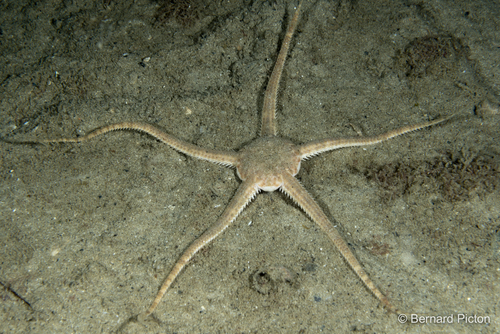
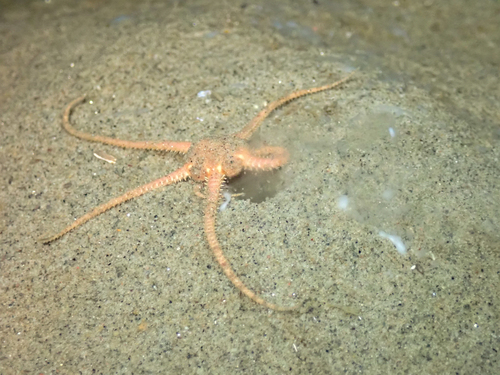
Ophiura albida has a central disc that reaches about 1.5 centimetres (0.6 in) in diameter, and five arms that can grow up to 6 centimetres (2.4 in) long. The disc is flattened, and its upper surface is covered in small plates. Most of these plates are brick red, but the plates along the edge of the disc, close to where the arms attach, are white. The arms are slender, fragile, segmented, and gradually taper toward their tips. The plates on both the upper and lower sides of the arms have convex edges. Each arm segment holds three short spines that lie flat against the arm surface, and small pores are present between the plates. The presence of these pores distinguishes this species from the otherwise very similar Ophiura ophiura. The underside of the disc is pale in color, and has a central mouth surrounded by five large plates modified into jaws, which are fringed with teeth.
Ophiura albida is typically found at depths down to about 200 metres (660 ft), though one authority records it at depths as great as 850 metres (2,790 ft). Its geographic range stretches from Norway to the Mediterranean Sea and the Azores. It lives on the seabed across a range of soft substrates, including coarse sand, fine sand, gravel, and muddy sand. It is common around the coasts of the British Isles, and has been recorded at densities as high as 900 individuals per 1 square metre (11 sq ft).