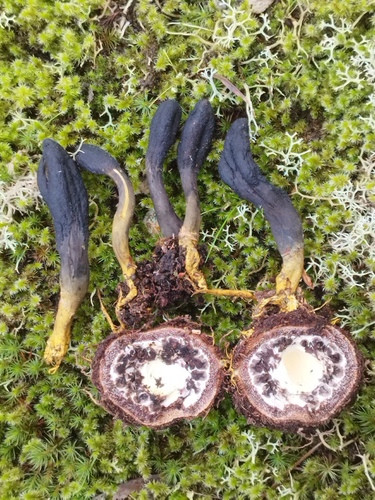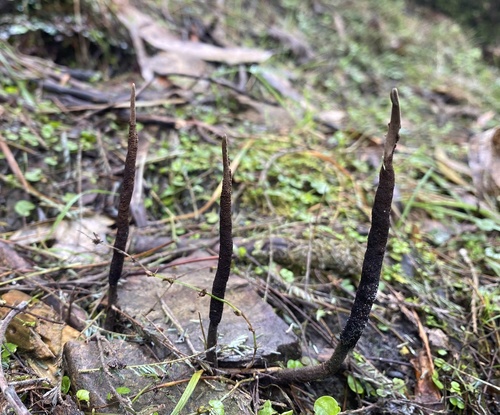
About Ophiocordyceps robertsii (Hook.) G.H.Sung, J.M.Sung, Hywel-Jones & Spatafora
Ophiocordyceps robertsii, known as vegetable caterpillar in New Zealand, with the Māori names āwhato or āwheto, is an entomopathogenic fungus. It is classified in the family Ophiocordycipitaceae, order Hypocreales, phylum Ascomycota.
This fungus infects caterpillars of moths that live in leaf litter, turning the caterpillars into fungal mummies. It grows a fruiting spike that emerges above the forest floor to release spores. When caterpillars feed on leaf litter, they ingest these spores, which completes the fungus’s life cycle. Signs of this species are small brown stems pushing through the forest floor; the dried remains of the host caterpillar are found underneath these stems.
Europeans first mistakenly believed this organism was a worm or caterpillar that burrowed from the top of a tree down to its roots, then exited and grew a plant shoot from its head. This species was the first fungus collected from New Zealand to receive an official binomial name.
Māori have used parasitised caterpillars of this species both as food and to produce a traditional ink called ngārahu, which is used for tā moko tattoos. To make the ink, charred caterpillars are mixed with tree sap to create an almost black product. Scientists have proposed that this fungus produces antiseptic chemicals that can prevent infection. In the early 20th century, mummified infected caterpillars were sold to tourists as a curio.