About Operophtera bruceata (Hulst, 1886)
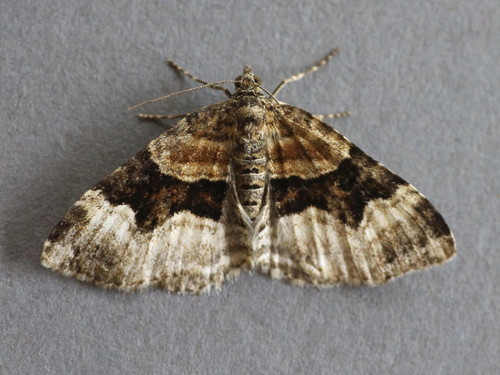
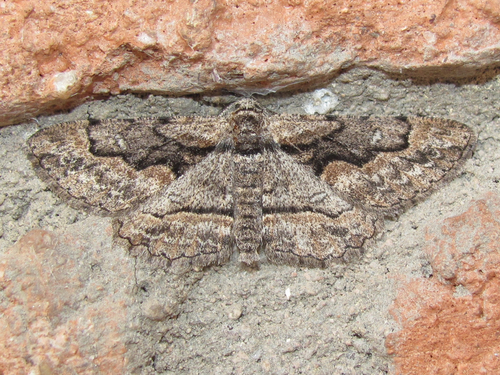
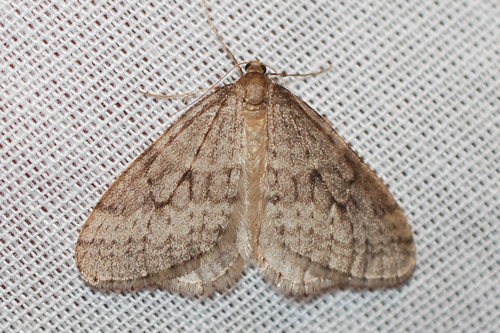
Operophtera bruceata, commonly called the Bruce spanworm, hunter's moth, or native winter moth, is a moth species belonging to the family Geometridae. This species was first formally described by George Duryea Hulst in 1886. Its range extends across southern Canada from coast to coast and covers the northern regions of the United States. The wingspan of adult males measures 25 to 30 mm. Females have underdeveloped wings and cannot fly. Adult moths are active and in flight from October through December. Bruce spanworm is very similar in appearance and life cycle to the invasive related winter moth, Operophtera brumata, and the two species are known to hybridize. They are almost identical in outward appearance, but can be distinguished either by morphological comparison of uncus shape or through DNA analysis. Bruce spanworm produces the same mating pheromone as winter moth. Larvae hatch in early spring, after the species overwinters in the egg stage. Newly hatched neonate larvae primarily feed on buds and newly unfurling leaves of sugar maple, American beech, and trembling aspen. Feeding has also been recorded on willow and a variety of other deciduous trees. After feeding for several weeks, late-instar caterpillars move down to the soil and construct an earthen cocoon. They remain in the pupal stage until late fall or early winter, when they emerge as adult moths. Viral and microsporidian diseases are known to affect the larvae and pupae of Bruce spanworm. In populations of Bruce spanworm collected in the northeastern United States, infection rates from a nucleopolyhedrovirus (NPV) baculovirus were low. This NPV is related to, but genetically distinct from, the NPV found in winter moth populations from the same region. Collections of Bruce spanworm larvae from an outbreak population in Maine, however, showed high levels of microsporidia infection.